
Best Hair Transplant Clinic in Visakhapatnam: 6 Things to Check Before You Book
Every clinic in Vizag calls itself the best. Here are six checks from who holds the punch to what month twelve looks like that tell you which one deserves the word.
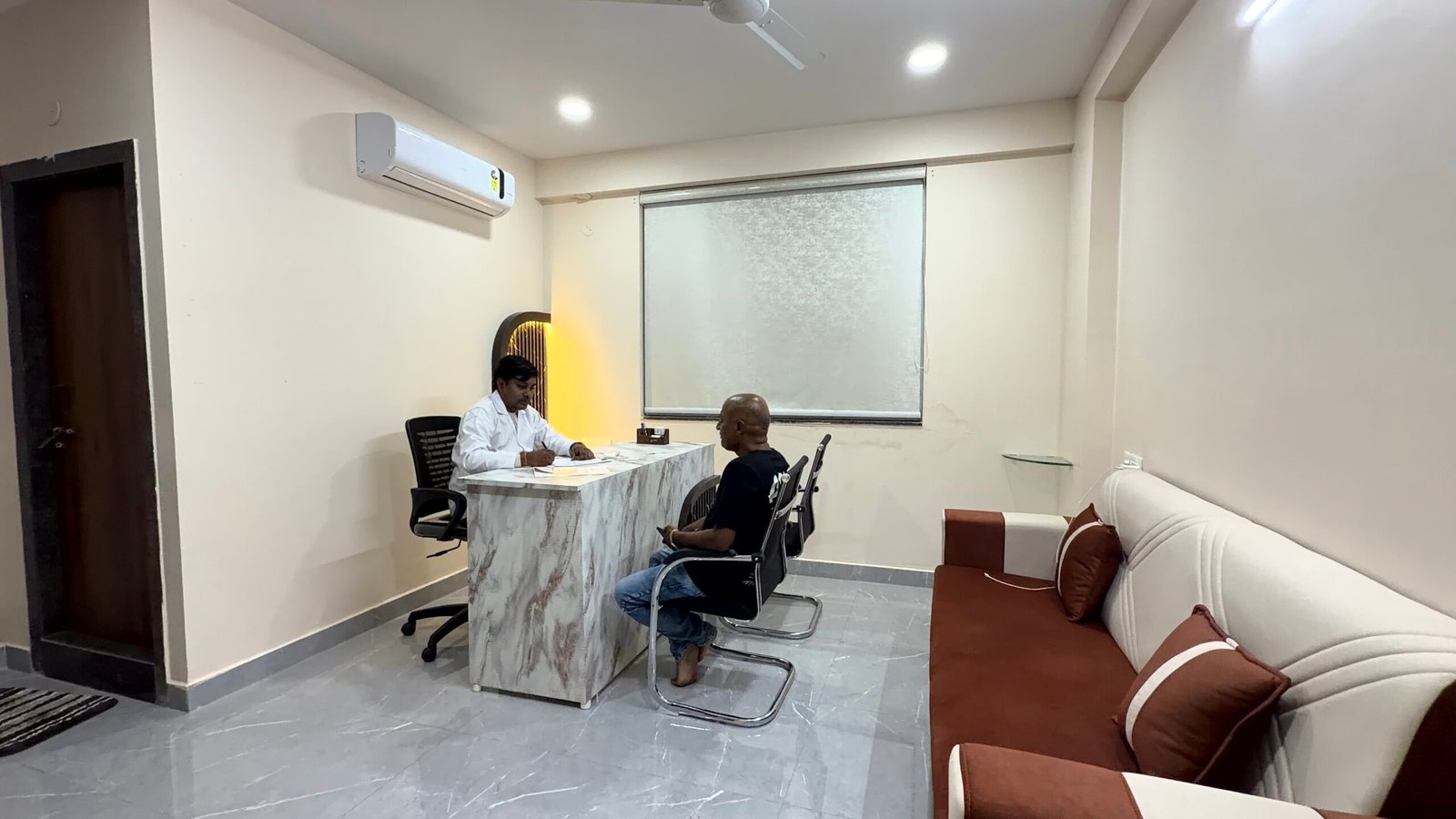
Search for the best hair transplant clinic in Visakhapatnam and you will read the word "best" a dozen times before you have scrolled once. It tells you nothing. Nobody hands out the title, and nobody checks who is using it.
That leaves the checking to you. It matters more than most decisions, because a hair transplant is permanent, the donor hair it uses does not grow back, and the result takes a full year to show. A poor choice is very hard to undo.
This guide gives you six checks that separate a good hair transplant clinic in Vizag from a risky one. Take them to any clinic you visit, including ours. We run Hair Reborn at CBM Compound in Asilmetta, so we are not neutral, and we would rather say so. Where we describe how our own clinic works, it sits in a separate box marked How We Do It, so you can always tell advice from advertising.
Key Takeaways
- The most important check is who does the surgical work. It must be a registered doctor with surgical training.
- The US FDA approves medicines and clears devices. It does not approve clinics or surgical procedures.
- Only reviews written six to twelve months after a transplant can tell you about results.
- FUE, DHI and sapphire FUE are variations of one procedure. The team matters more than the tool.
- The final result shows at twelve months at the hairline, and at fifteen to eighteen months at the crown.
- Walk away from any clinic that offers a guarantee, quotes a price without examining your scalp, or pushes you to pay the same day.
- First, Find Out What Kind of Hair Loss You Have
- Check 1: Who Is the Doctor, and Is Hair Their Main Work?
- Check 2: Does the Clinic Earn the Word Best?
- Check 3: What Does FDA Approved Actually Mean?
- Check 4: What Do the Reviews Really Tell You?
- Check 5: Does the Equipment Matter as Much as Clinics Say?
- Check 6: What Results Can You Honestly Expect?
- Your Checklist for Any Clinic Visit
- Frequently Asked Questions
First, Find Out What Kind of Hair Loss You Have
Hair loss rarely arrives all at once. It shows up as a parting that looks wider in the bathroom mirror, a hairline that has quietly moved back in last year's photographs, or a shower drain that needs clearing more often than it used to. By the time most people in Vizag start searching for a clinic, they have already tried two or three oils, a shampoo a cousin swore by and at least one supplement ordered online.
Does Hard Water in Vizag Cause Hair Loss?
Many people here are convinced the city itself is to blame, and they are partly right. Vizag sits on the coast. The air is humid and salty for most of the year, and many apartments and independent houses run on borewell or tanker water that is noticeably hard. Add a helmet worn twice a day on the ride to Gajuwaka, the port or the IT offices at Rushikonda, and the scalp spends a lot of time warm, damp and covered. That combination encourages dandruff, fungal irritation and hair breakage, and it makes thin hair look thinner.
What it does not do is cause pattern baldness. A receding hairline or a thinning crown is driven by genetics and hormones, and it would happen in Hyderabad or Bengaluru just the same.
The difference is practical. Breakage and scalp irritation respond to scalp care and small changes in routine. Pattern hair loss needs medical treatment and, in later stages, a hair transplant. Treating one as the other is how people lose both money and time. It is also why the first thing a good clinic does is diagnose, not sell.
If your problem sits in the last row, you may not need a transplant clinic at all. If it sits in the first two, the six checks below are for you.
Check 1: Who Is the Doctor, and Is Hair Their Main Work?
This is the check that matters most, and the one that goes wrong most often in India. National Medical Commission guidelines state that hair transplantation should be performed only by registered medical practitioners with proper surgical training, preferably dermatologists or plastic surgeons. Assistants must come from a medical background and work under the doctor's supervision.
So ask three questions at every clinic:
You can verify the number on the Indian Medical Register maintained by the National Medical Commission, or through the Andhra Pradesh Medical Council. A good clinic answers without hesitating.
Look at the clinic's focus too. Many skin and beauty centres offer hair transplants as one item on a long menu. A team that plans, performs and follows up transplants every week builds a kind of judgement that an occasional operator does not: how a hairline should be drawn so it still looks right at fifty, and how many grafts are safe to take from a donor area.
Then look at the room. A transplant is a long procedure under local anaesthesia, usually four to eight hours, and it belongs in a proper procedure room with monitoring and a recovery area. A salon chair in a curtained corner is not the same thing, however nice the reception looks.
What a Good First Consultation Looks Like
It starts with listening. When did you first notice the change, who else in the family has lost hair, what have you already tried, and what would a good result look like to you? Someone who wants a slightly stronger hairline for his wedding in eight months needs a different plan from someone who has been shaving his head for ten years and is finally curious.
The doctor then examines your scalp under magnification, checking density in the thinning areas and in the donor zone at the back of the head. If the pattern suggests an internal cause, expect blood tests such as thyroid function, iron stores and vitamin D. You should leave with a clear explanation, your options, what each can and cannot achieve, and what it will cost. There should be no pressure to book on the day.

A first consultation should be a conversation and a scalp examination, not a sales pitch.
How We Do It at Hair Reborn, Vizag
Hair restoration and scalp care are what we do all day, every day. They are not a side service attached to a general practice. Hair Reborn opened its Visakhapatnam centre at CBM Compound, Asilmetta, to serve patients across north coastal Andhra Pradesh. Our team brings more than 15 years of hands-on work in hair restoration and skin care.
Every patient is seen by a doctor before any treatment is suggested. Counsellors and technicians support the process, but the diagnosis, the treatment plan and the surgical steps of a transplant stay with the medical team.
Check 2: Does the Clinic Earn the Word Best?
Since nobody awards the title, judge it by behaviour. Four habits tell you most of what you need to know.
They Are Willing to Say No
The hair at the back and sides of your head is the only supply you will ever have, and it does not grow back once it is moved. A responsible clinic protects it. That sometimes means telling a 23 year old whose hair loss is still moving fast to start medical treatment and come back in a year. It sometimes means telling someone with a weak donor area that full coverage is not possible. If every clinic you visit says yes to everything, be careful.
They Design the Hairline for Your Face and Your Age
A low, straight, dense hairline looks fantastic at 28 and odd at 48. Good hairline design takes into account your face shape, your forehead muscles, how your hair loss is likely to progress and how much donor hair should be held in reserve. It is drawn on your forehead, discussed with you in front of a mirror and adjusted until both you and the doctor are comfortable. It should never be rushed.
They Put the Price in Writing and Count Grafts in Front of You
Most clinics in Visakhapatnam charge per graft. That is fair, provided the count is honest. Ask for a written estimate that states the expected number of grafts, the price per graft, what is included such as medicines, PRP and follow-up visits, and what is not. On the day, ask how grafts will be counted and whether you will be shown the tally.
They Stay With You for a Full Year
The procedure is one day. The result takes twelve months. In between there is a shedding phase that worries almost everyone, a slow patch around the third month, and then steady growth. A clinic that schedules reviews, takes comparison photographs and answers the phone in month two is worth more than one that offers a slightly lower price and disappears after the bandage comes off.
Red Flags That Should Make You Walk Away
How We Do It at Hair Reborn, Vizag
You get a straight answer in the first visit, including when the answer is not yet. Hairlines are drawn, discussed in front of a mirror and photographed before the procedure. The estimate is written down, with the graft range, the price per graft and what is included. Reviews are scheduled through the first twelve months, with comparison photographs.
We are also probably not the right clinic for you if your only criterion is the lowest price per graft in the city, or if you want a promise that every graft will grow. No honest clinic can give that, because healing varies from person to person.
Check 3: What Does FDA Approved Actually Mean?
FDA approved is one of the most used and least explained phrases in hair clinic advertising. It appears on hoardings along the Beach Road and on half the clinic websites in the city, usually without any mention of what exactly has been approved. Patients are left to assume that the clinic itself has passed some kind of American inspection. It has not.
The United States Food and Drug Administration regulates medicines and medical devices. A medicine is approved after clinical trials show that it works for a specific condition and that its benefits outweigh its risks. Most devices, such as lasers and surgical instruments, go through a different route and are cleared, which means the FDA has accepted that the device is as safe and effective as a similar product already on the market.
What the FDA does not do is approve clinics, certify doctors or sign off on surgical techniques. A hair transplant is a medical procedure, not a product, so there is no such thing as an FDA approved hair transplant. In India, medicines and devices are regulated by the Central Drugs Standard Control Organisation, and doctors by the National Medical Commission and the state medical councils. FDA status is a useful benchmark. It is not a substitute for a qualified doctor.
FDA Approved Hair Loss Treatments: Where Each One Stands
Five Safety Questions That Matter More Than the Label
An approved medicine or a cleared device is only as safe as the way it is used. Ask these at any clinic.
What tests do you ask for before a transplant?
Expect blood counts, blood sugar, a clotting profile and viral markers, plus a blood pressure check on the day.
How are instruments sterilised and what is single use?
Expect a steam autoclave for reusable instruments, and single use punches, needles, blades and PRP tubes.
How is the anaesthesia dosed and monitored?
Expect a dose calculated against your body weight, with pulse, blood pressure and oxygen levels watched throughout.
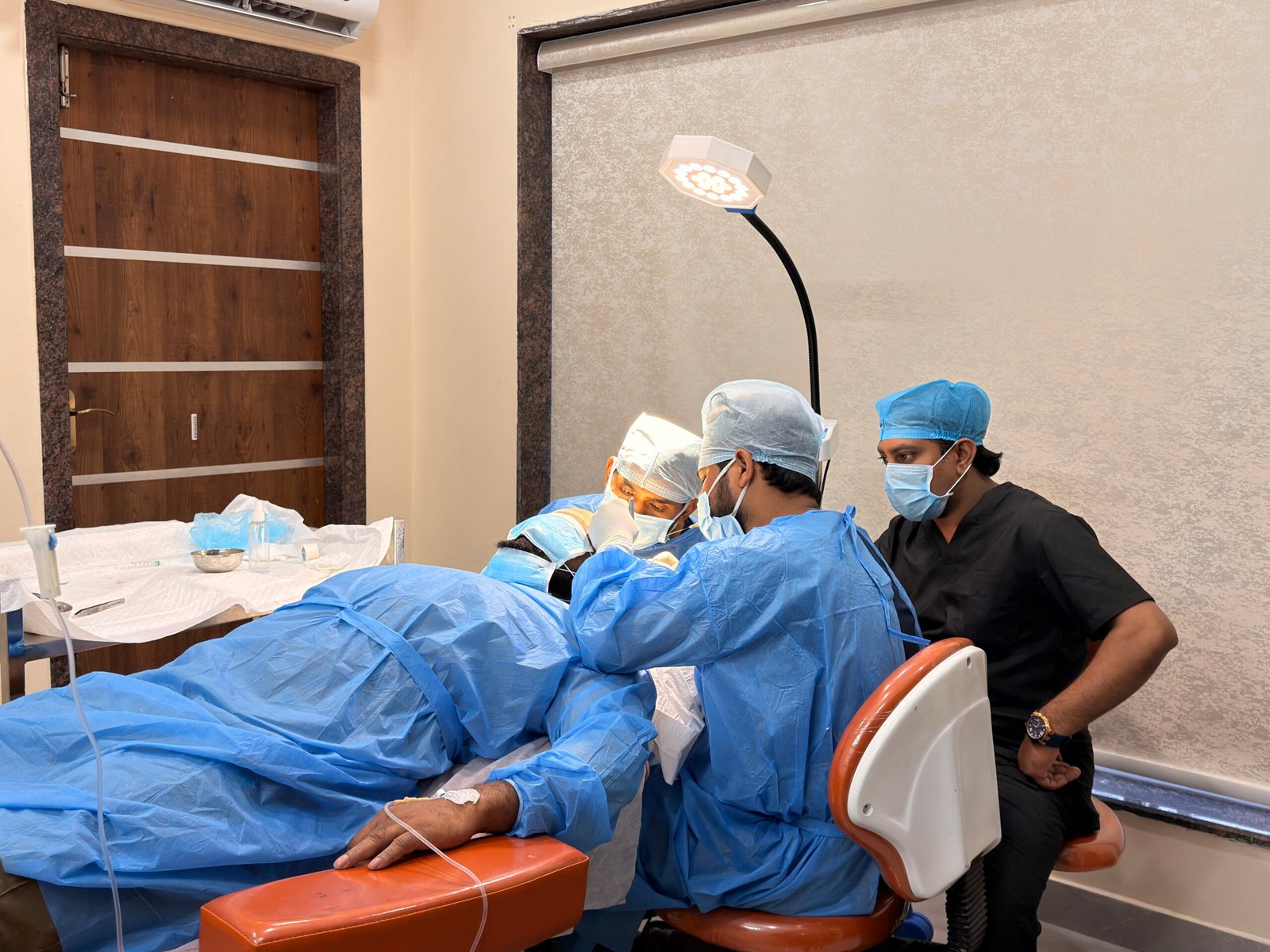
Gowns, gloves, drapes and monitoring are the parts of safety a label cannot show you.
How We Do It at Hair Reborn, Vizag
We do not call ourselves an FDA approved clinic, because no such thing exists. Our treatments are based on US FDA approved medicines and FDA cleared devices, delivered under a written clinical safety protocol: a doctor's diagnosis before any treatment, screening blood tests before every procedure, autoclave sterilisation with single use consumables, weight based anaesthesia with continuous monitoring, written consent, and a next day review after every transplant.
Check 4: What Do the Reviews Really Tell You?
Choosing a hair clinic is an act of trust. You are letting someone make a permanent change to your appearance, and no amount of clinic advertising can tell you what it is really like to be a patient there. Other patients can. The trick is knowing how to read them.
How We Do It at Hair Reborn, Vizag
As of September 2026, our Vizag clinic holds a 5.0 rating on Google from 27 reviews. We will be upfront about that number: it is small next to clinics that have been in the city for a decade. Our Asilmetta centre is newer, and transplant patients tend to wait until they see their final result before they write anything. We do not offer discounts or gifts in exchange for reviews.
Check 5: Does the Equipment Matter as Much as Clinics Say?
Machines do not perform hair transplants. People do. It is worth saying, because clinic advertising in Vizag can give the impression that the right device guarantees the right result. It does not. What good equipment does is give a skilled team finer control: smaller wounds, less damage to each follicle, shorter time with grafts outside the body and a more comfortable day for you.
FUE vs DHI vs Sapphire FUE vs FUT: Which Is Right for You?
Patients often arrive having read that one technique is the latest and therefore the best. In truth these are variations on the same procedure, and each has its place.
FUE is a way of extracting grafts, while DHI is a way of implanting them, so the two are frequently used together. Sapphire blades make clean, fine incisions, and the difference is real but modest. The person holding the blade, and the angles they choose, matter considerably more than which blade they hold.
Check 6: What Results Can You Honestly Expect?
The final result shows at twelve months at the hairline, and at fifteen to eighteen months at the crown. Shedding between weeks two and six is normal. It is a sign the grafts have taken hold and are resting before they grow. Most people worry during this phase.
How Many Grafts Will You Need? The Norwood Scale as a Guide
Hair loss progresses differently in different people. Some men notice a receding hairline first, others see the crown thin and fall out at the same time. The Norwood Scale describes seven stages of male pattern baldness, and it helps predict how many grafts might work for you.
Hair Transplant Results Month by Month
Hair growth is gradual, but by month six to nine, most people see transformation.
Looking After New Grafts in Vizag's Climate
Vizag's heat and humidity are harder on the scalp than cooler climates. Heat increases sweat, which can irritate healing tissue, and humidity encourages fungal overgrowth. For the first two weeks after your transplant, keep your scalp dry and out of direct sunlight, and wear loose hats or caps when you go out. Helmets should be avoided for at least a week.
After two weeks, you can resume normal activity, but continue to protect the scalp from harsh sun for three months. Hard water is still a concern: if your tap water is particularly hard, rinse your hair with distilled water after washing for the first month, or use a gentle water softener in your shower.
What No Clinic Should Promise
No clinic should promise a 100% graft survival rate or guarantee that every single hair will grow. Healing varies from person to person, and some grafts do not take. An honest clinic will quote a success rate of 80 to 95%, depending on their experience and technique, and will explain why the rest do not survive.
Also be cautious of clinics that promise you can return to work the next day or that there will be no visible scarring. Redness and slight swelling are normal after a transplant, and they take a week or more to fade. If you work in air-conditioned comfort, you might manage it, but if you work outdoors or are visible to clients, take at least a few days off.
Finally, remember that a hair transplant is permanent, but your remaining hair is not. If you are at Norwood stage III or IV, your untreated hair at the edges may continue to thin over the years. A good clinic will discuss this and often recommend medicines such as minoxidil or finasteride to protect the hair you still have.
Ready to Take the Next Step?
Book a consultation with our hair restoration specialists in Visakhapatnam. Walk in with your six checks, and we will answer every question honestly, including the ones that matter most.
Schedule Your ConsultationReach us at +91 97771 75524 or visit Hair Reborn at CBM Compound, Asilmetta, Visakhapatnam.
Your Checklist for Any Clinic Visit
Print this checklist or take a photo on your phone before you visit any clinic in Vizag.
Conclusion
Hair transplants are permanent and life-changing when done well, and risky and expensive to correct when done poorly. There is no shortcut to choosing a good clinic. The six checks above take time, and they are meant to. A doctor who rushes you or avoids your questions is not the one to trust with a permanent change to your appearance.
Hair Reborn, at CBM Compound in Asilmetta, is built around these checks. We encourage you to walk in with your questions, use the six criteria above, and talk to past patients if you wish. The best proof of good work is not a website, but a patient one year after their procedure, with hair that looks natural and a story that is honest about the journey to get there.
Frequently Asked Questions
Is hair transplant surgery permanent?
Yes. The hair transplanted from the back and sides of your head is genetically resistant to pattern baldness and will stay that way after transplantation. However, your other non-transplanted hair may continue to thin if you have active hair loss.
How long does a hair transplant surgery take?
A typical hair transplant takes four to eight hours, depending on the number of grafts and the technique used. You will be under local anaesthesia throughout, and the procedure is not painful, though you may feel pressure and vibration.
What is the success rate of hair transplants?
The graft survival rate typically ranges from 80 to 95%, depending on the technique, the surgeon's experience, and post operative care. Most grafts take hold within the first few weeks.
What are the side effects of a hair transplant?
Common temporary side effects include redness, swelling, itching, and mild discomfort at the surgical site for the first week. Shedding of transplanted hairs between weeks two and six is normal and expected. Serious complications are rare when done by experienced professionals.
How much does a hair transplant cost in Visakhapatnam?
The cost depends on the number of grafts needed, the technique used, and the clinic's expertise. Most clinics charge per graft. Always ask for a written estimate before committing, and be cautious of prices that sound unusually low.
When will I see results after a hair transplant?
New hair begins to grow around three months after the procedure. The hairline result is visible by twelve months, and the crown result takes until fifteen to eighteen months. Full thickness and appearance continue to improve up to two years.
Can I wash my hair after a transplant?
Gentle washing can usually begin after three to five days with a clinic provided wash bottle or cap. For the first two weeks, avoid direct water pressure on the transplant site and use only the gentle wash method recommended by your surgeon.