
Does Laser Tattoo Removal Hurt? What the Pain Really Feels Like
Wondering if laser tattoo removal hurts? Learn the real pain level, what the sensation feels like, numbing options, and tips to manage discomfort during treatment.
If you are considering laser tattoo removal, the question of pain is probably high on your list of concerns. It is a fair question. The idea of a laser breaking up ink beneath your skin sounds intense, and most people want to know exactly what they are getting into before they book a session.
The honest answer is that laser tattoo removal does involve some discomfort, but the level of pain varies significantly depending on the location of the tattoo, your individual pain tolerance, the type of laser used, and whether numbing options are applied before the procedure. For most people, the sensation is manageable and far less painful than they expected.
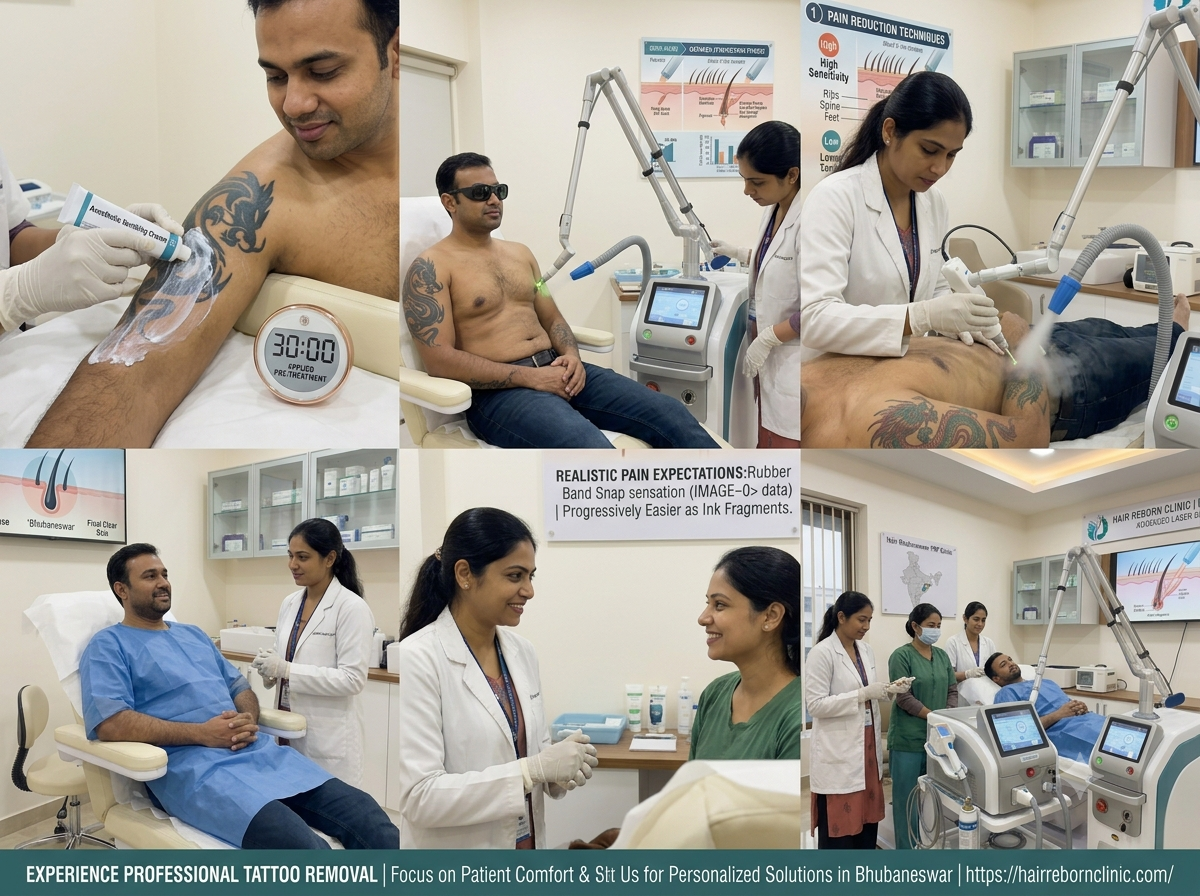
This guide breaks down what the pain actually feels like, which factors influence it, how different body areas compare, and what you can do to minimize discomfort during your sessions. If pain has been holding you back from removing a tattoo you no longer want, this information should help you make a confident and informed decision.
What Does Laser Tattoo Removal Feel Like?
The most common description patients give is that laser tattoo removal feels like a rubber band snapping against the skin repeatedly. This comparison comes up so often because it captures the quick, sharp sensation of each laser pulse quite accurately.
Each pulse of the laser lasts only a fraction of a second, and the laser moves across the tattoo in rapid succession. So while each individual pulse produces a brief sting, the cumulative effect over the course of a session can build up, especially on larger tattoos that require more time under the laser.
Some patients describe the sensation as a hot, prickling feeling, similar to tiny drops of hot oil splashing on the skin. Others compare it to the feeling of a mild sunburn being tapped repeatedly. The intensity depends heavily on the body area being treated and the depth and density of the ink.
It is worth noting that the discomfort during laser tattoo removal is generally shorter in duration than getting the tattoo in the first place. Most sessions last between 5 and 30 minutes depending on the size of the tattoo, whereas the original tattooing session may have taken hours.
Pain Level by Body Area
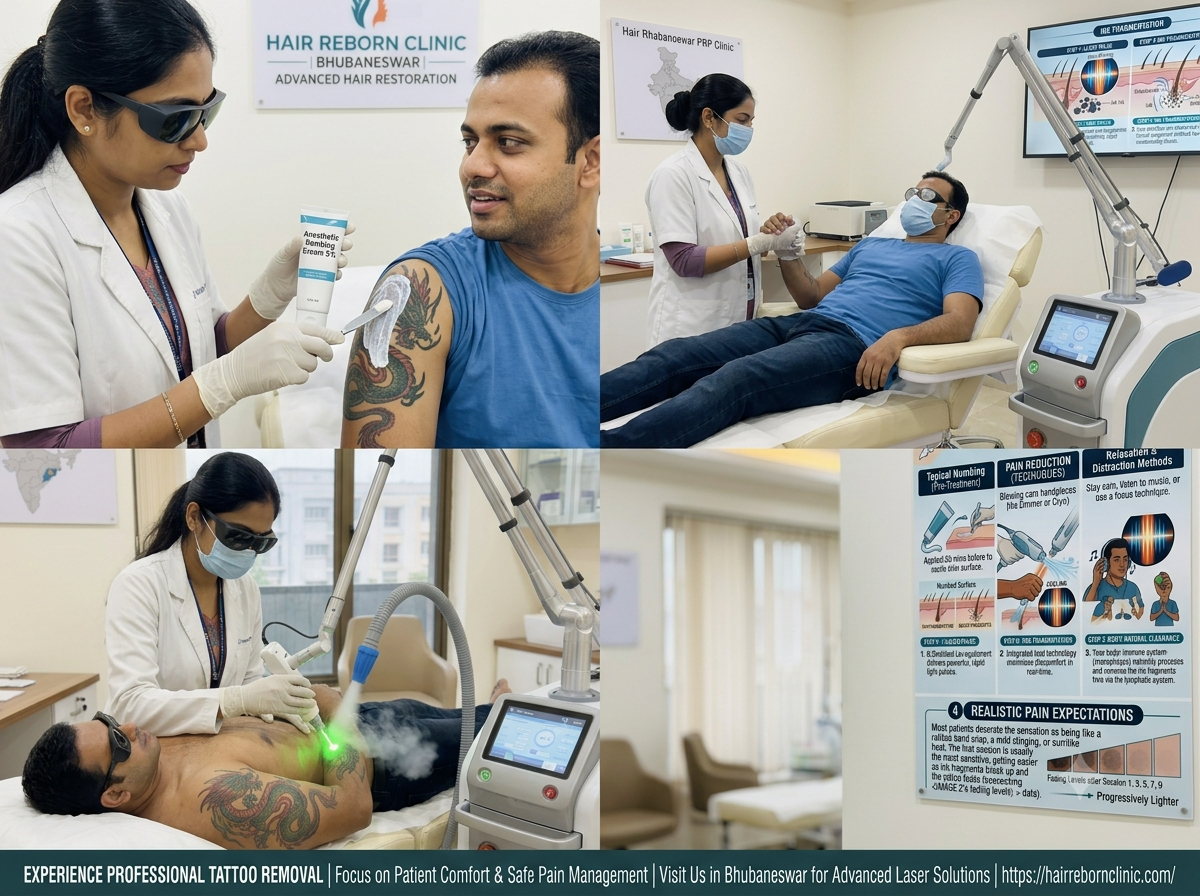
Not all body areas experience the same level of discomfort during laser tattoo removal. Areas with thinner skin, more nerve endings, or less fat and muscle padding tend to be more sensitive. Understanding this can help you prepare mentally for your treatment.
| Body Area | Pain Level | Notes |
|---|---|---|
| Upper Arm / Shoulder | Low to Moderate | Thicker skin and more muscle padding make this one of the most tolerable areas |
| Forearm | Moderate | Moderate skin thickness with some sensitivity near the inner wrist |
| Upper Back | Low to Moderate | Generally well-tolerated due to thicker skin and muscle |
| Lower Back | Moderate | Slightly more sensitive than upper back, especially near the spine |
| Chest | Moderate to High | Thinner skin and proximity to bone increase sensitivity |
| Ribs / Side Torso | High | Very thin skin over bone, one of the most sensitive areas |
| Ankle / Foot | High | Thin skin, many nerve endings, and close to bone |
| Wrist / Hand | High | Dense nerve endings and thin skin make this area quite sensitive |
| Neck | High | Thin skin and high nerve density contribute to increased discomfort |
If your tattoo is in a high-sensitivity area, discuss numbing options with your dermatologist before the session. Proper preparation can make a significant difference in your comfort level.
Factors That Influence How Much It Hurts
Pain during laser tattoo removal is not a fixed experience. Several factors determine how much discomfort you will feel during each session.
Numbing and Pain Management Options
Modern clinics offer several options to reduce discomfort during laser tattoo removal. You do not have to endure the full sensation if you prefer a more comfortable experience.
Most patients find that a combination of topical numbing cream and a cooling device provides more than enough comfort for a typical session. Talk to your clinician before your first appointment to determine the best pain management approach for your situation.
Thinking About Tattoo Removal?
Book a consultation so a specialist can assess your tattoo, explain the process and give you a realistic session estimate.
Schedule Your ConsultationReach us at +91 97771 75524
How Pain Compares to Getting the Tattoo
One of the most reassuring things for people considering laser removal is that most patients say the removal process is less painful than getting the tattoo was. This makes sense when you consider the differences between the two experiences.
Tattooing involves a needle repeatedly puncturing the skin for an extended period, often one to several hours. The needle delivers ink into the dermis layer of the skin, and the sensation is sustained and cumulative throughout the session. Areas like the ribs, spine, and feet are notoriously painful during tattooing.
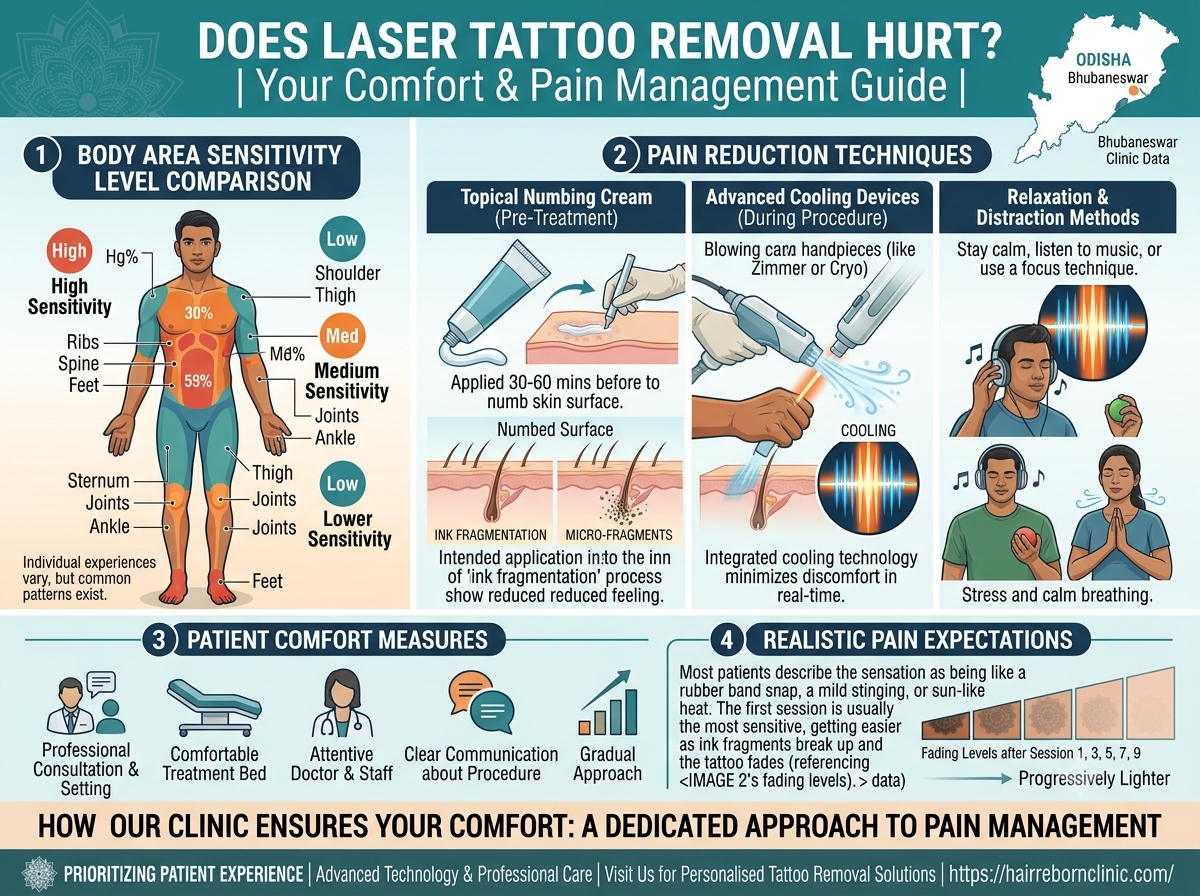
Laser removal, by contrast, involves pulses of light rather than needles. Each session is significantly shorter, usually 5 to 30 minutes. While the sensation per pulse may be sharp, the overall duration is much shorter than a tattooing session. Many patients who sat through hours of tattooing find laser removal to be comparatively easy to handle.
That said, the two experiences feel different. Tattooing is a sustained, scratching pain. Laser removal is more of a snapping, stinging pain. Neither is pleasant, but most people find the laser to be more manageable overall.
Tips to Reduce Pain During Your Session
What to Expect After the Session
After a laser tattoo removal session, the treated area will feel warm and tender, similar to a mild sunburn. This is completely normal and typically subsides within a few hours. Some patients experience redness, swelling, and minor blistering in the hours and days following treatment.
The post-treatment discomfort is generally mild and manageable with over-the-counter pain relief if needed. Applying a cold compress to the area for 10 to 15 minutes at a time can help reduce swelling and soothe the skin. Your clinician will provide aftercare instructions, including applying an antibiotic ointment and keeping the area covered with a sterile bandage.
Most patients find that the post-session discomfort is less bothersome than the procedure itself. The treated area heals within one to two weeks, and by the time your next session is scheduled, the skin will have fully recovered.
Frequently Asked Questions
Is laser tattoo removal more painful than waxing?
The sensations are different. Waxing involves a pulling pain, while laser removal is more of a snapping, stinging feeling. Most patients say the pain level is comparable, though the discomfort from laser removal is shorter in duration per treated area.
Can I take painkillers before my laser removal session?
You can take a non-blood-thinning pain reliever like acetaminophen (paracetamol) about 30 to 60 minutes before your session. Avoid aspirin and ibuprofen, as they can increase the risk of bruising and bleeding. Always check with your clinician before taking any medication.
Does the pain get worse with each session?
Not necessarily. Many patients find that later sessions are less uncomfortable because less ink remains in the skin. However, the treated skin may be slightly more sensitive after multiple sessions. Your clinician will adjust the laser settings as needed to balance effectiveness and comfort.
What if I have a very low pain tolerance?
If you are particularly sensitive to pain, discuss this with your clinician before your first session. Options like stronger topical numbing cream, injectable local anesthesia, or shorter session durations can all help make the experience more comfortable for you.
Is there a completely painless way to remove a tattoo?
No tattoo removal method is completely painless. Laser removal is the safest and most effective method currently available, and with proper numbing and cooling, the discomfort is manageable for the vast majority of patients. Non-laser methods like surgical excision or dermabrasion are generally more painful and carry higher risks of scarring.