Scalp Treatment: Why a Healthy Scalp Is Important for Hair Growth
People spend a surprising amount on hair serums, oils, and vitamins while barely thinking about the scalp underneath — and that's usually where the real problem is hiding.
Book Free Consultation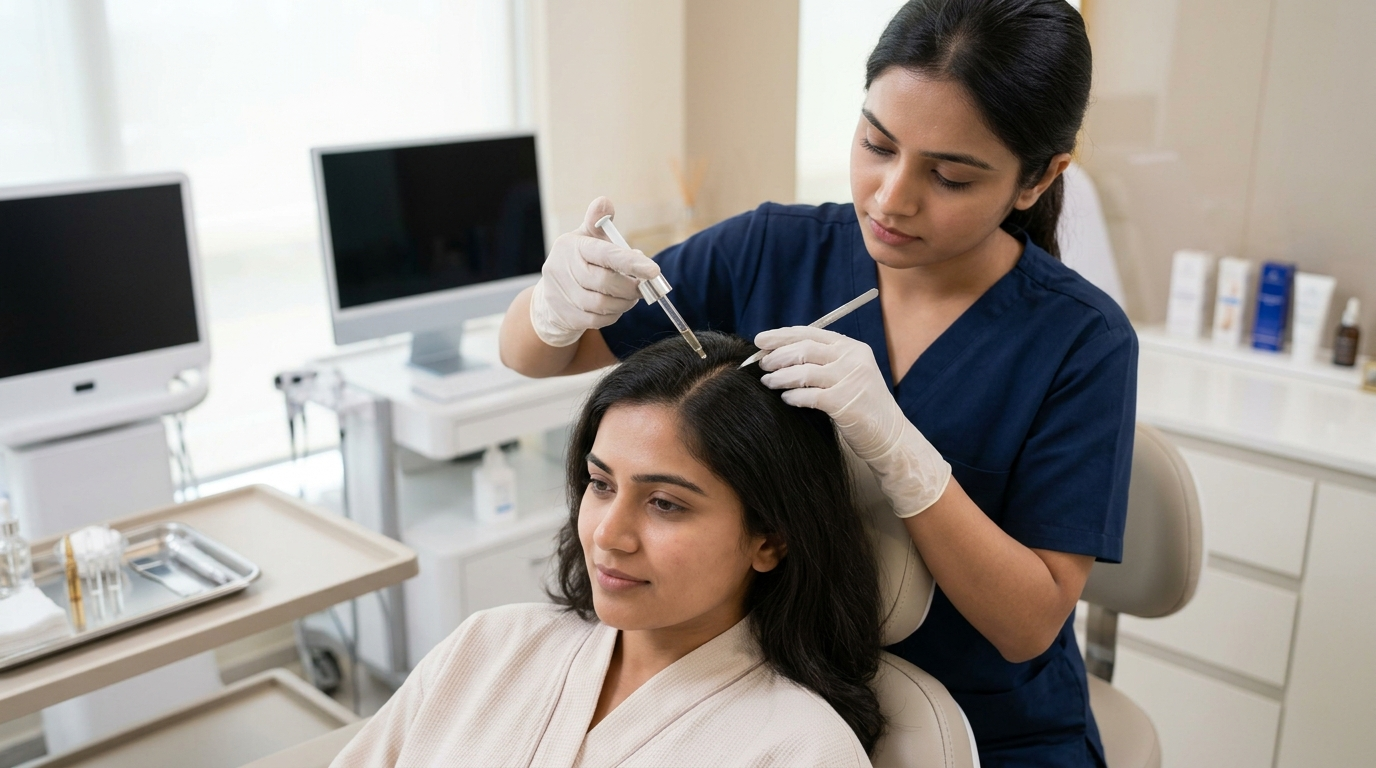
That's backwards, in a way. Hair doesn't grow from the strands you see in the mirror. It grows from follicles sitting under the scalp's surface, and if that environment isn't healthy, no amount of product applied to the hair itself is going to fix the actual problem.
This is one of the most common blind spots in hair care. Someone notices thinning or excessive fall, buys a hair oil recommended by a friend, uses it religiously for two months, sees no change, and gives up thinking their hair fall is "just genetic" or "just stress." In many cases, what's actually happening is a scalp issue that was never addressed — because nobody looked at the scalp itself.
Why the Scalp Matters More Than the Hair Strand
Think of the scalp as soil and hair as the plant growing out of it. You can buy the best fertiliser in the world, but if the soil underneath is compacted, inflamed, or clogged, the plant is never going to thrive the way it should. The scalp works the same way for hair follicles.
Each hair follicle sits in a tiny structure that needs proper blood flow, balanced oil production, and a clean environment to function well. When the scalp is inflamed, excessively oily, overly dry, or blocked with product buildup and dead skin, follicles struggle to get what they need. Over time, this shows up as thinning, excessive shedding, slower regrowth, or hair that just never seems to grow past a certain length.
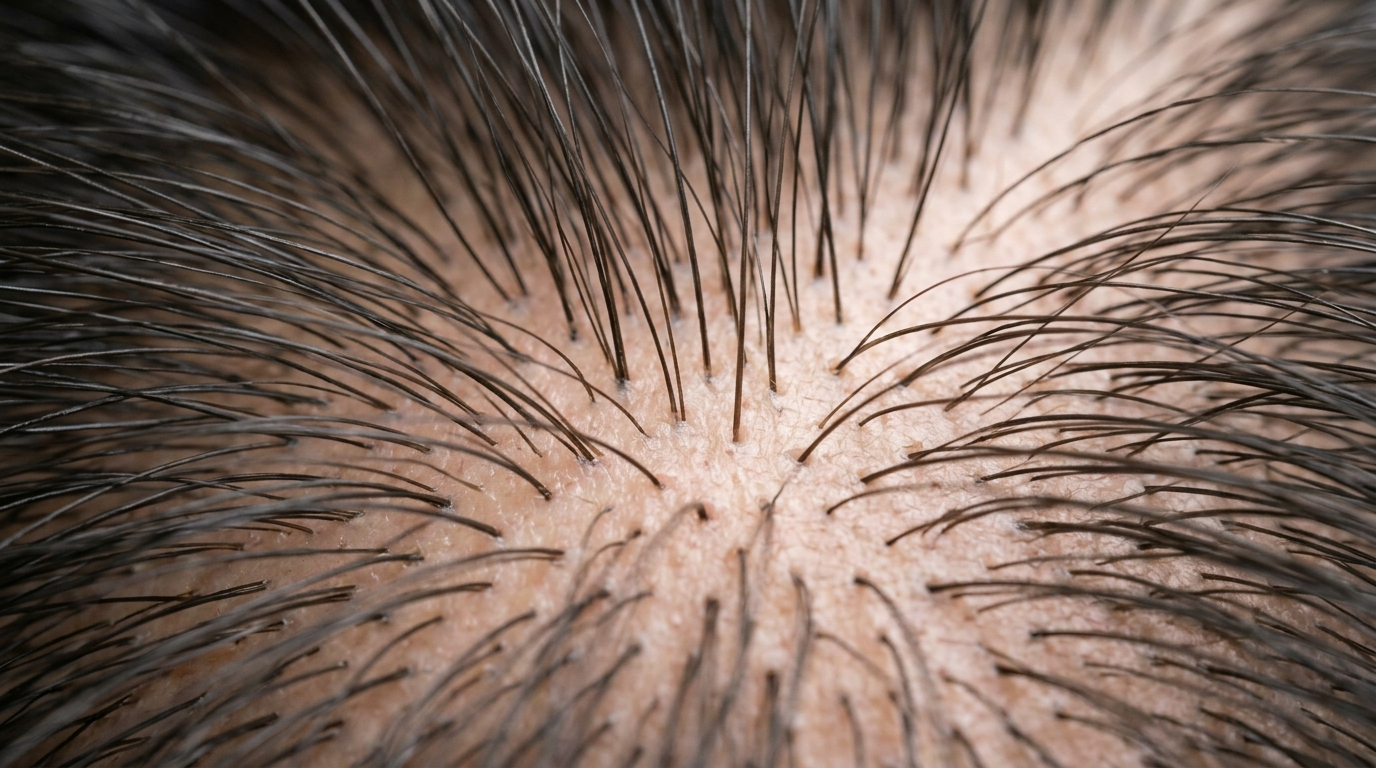
A healthy, clean scalp with good circulation is what lets a follicle actually use the products you put on your hair — not the other way around.
Common Scalp Problems That Affect Hair Growth
A few conditions come up again and again in people dealing with unexplained hair fall or slow growth.
Excess oil and clogged follicles. An overactive scalp produces more sebum than needed, which mixes with dead skin cells and product residue to clog follicles. This creates a low-grade, often invisible inflammation that weakens the hair growth cycle over time.
Dandruff and flaking. Persistent dandruff isn't just cosmetic. The underlying causes — often a yeast overgrowth called Malassezia, or an irritated, dry scalp — create ongoing inflammation that disrupts the follicle's normal growth pattern.
Scalp psoriasis or seborrheic dermatitis. These are more chronic conditions where the scalp skin itself is inflamed and scaling, and if left untreated, the constant irritation and scratching can eventually damage follicles enough to slow regrowth.
Poor circulation. Follicles rely on blood flow to get oxygen and nutrients. A tight, tense scalp — often linked to stress or rarely getting any scalp massage or stimulation — can mean follicles are technically alive but not getting what they need to grow at their normal pace.
Product buildup. Heavy styling products, dry shampoo used too frequently, and hard water mineral deposits can coat the scalp over time, physically blocking follicle openings and trapping oil and bacteria underneath.
How Scalp Health Directly Affects the Hair Growth Cycle
Hair grows in cycles — a growth phase, a resting phase, and a shedding phase — and this cycle happens at the follicle level, inside the scalp. A healthy scalp supports a longer, more consistent growth phase for each follicle. An unhealthy scalp, dealing with chronic inflammation, clogging, or poor blood flow, tends to push follicles into the resting and shedding phase earlier than they should, which is exactly why someone can experience hair fall that feels disproportionate to anything obviously wrong with their actual hair strands.
This is also why purely cosmetic fixes — a strengthening shampoo, a leave-in serum, biotin gummies — often plateau. They can support the hair shaft, but they don't do much for an underlying scalp condition that's actively working against healthy follicle function.
What Does Scalp Treatment Actually Involve?
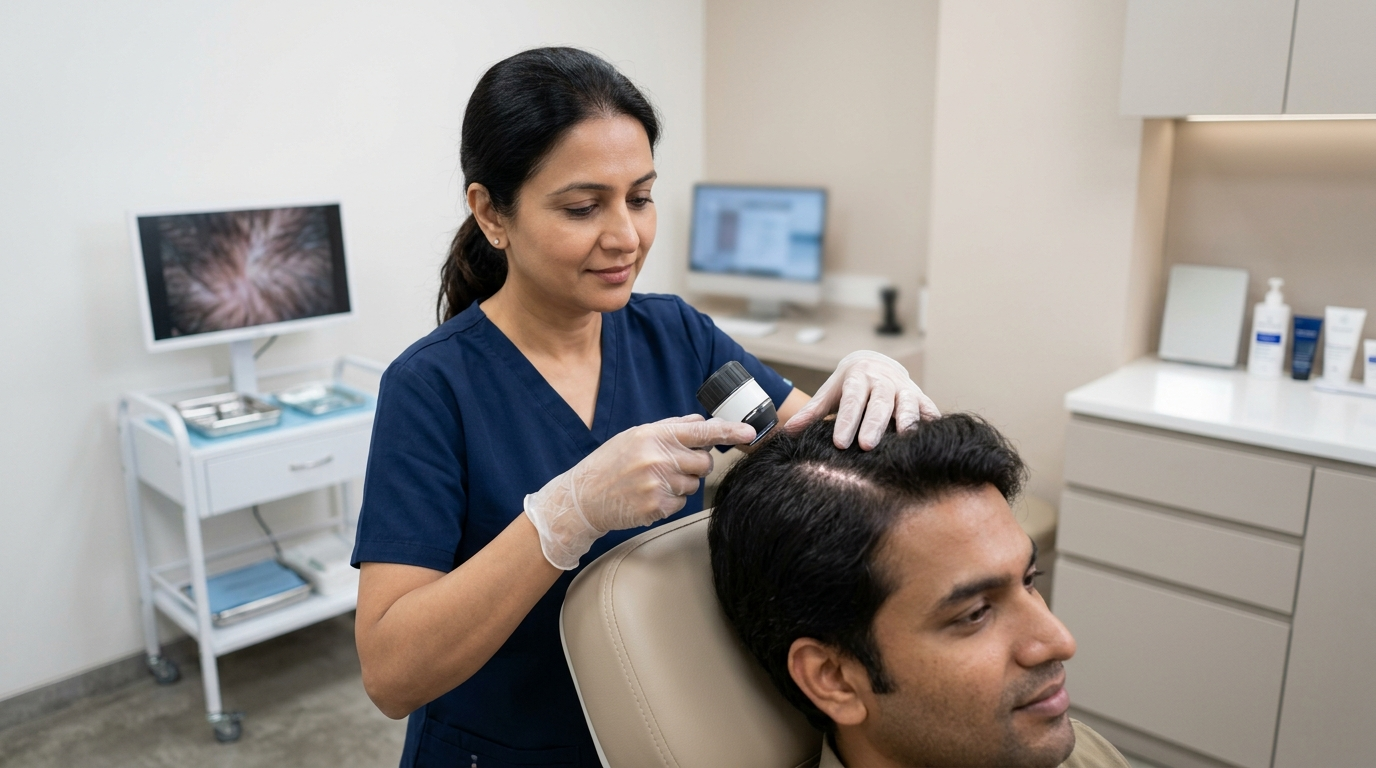
Scalp treatment, as done clinically, is different from a spa head massage or a regular oiling session at home. It usually starts with a proper scalp analysis, often using a scalp scanner or dermatoscope, to look at follicle density, oil levels, inflammation, and any visible flaking or irritation before deciding on a plan.
Depending on what's found, treatment can include deep-cleansing scalp exfoliation to clear buildup, targeted serums or medicated solutions to address dandruff, inflammation, or excess oil, and sometimes procedures like scalp mesotherapy or low-level laser therapy to improve circulation and stimulate follicle activity directly. For chronic conditions like seborrheic dermatitis or scalp psoriasis, treatment usually involves prescription-strength topical solutions that need a dermatologist's guidance rather than an over-the-counter fix.
A dermatoscope reading of follicle density, oil levels, and inflammation is what decides the actual treatment plan — not a generic anti-hair-fall package.
Common Mistakes People Make With Scalp Care
Over-washing or under-washing based on guesswork rather than actual scalp type. People with oily scalps often wash too infrequently, worried it will dry out their hair, which actually makes clogging worse. People with dry, flaky scalps sometimes over-wash, stripping natural oils and making the flaking worse in a different way.
Treating dandruff with random anti-dandruff shampoos without figuring out the actual cause. Dandruff from fungal overgrowth needs a different active ingredient than dandruff from a dry, irritated scalp, and using the wrong one for months without improvement is extremely common.
Ignoring scalp issues because hair fall feels like the more urgent, visible problem. Treating the fall without addressing the scalp underneath it is a bit like repainting a wall with a water leak behind it — it looks better temporarily, then the same problem resurfaces.
Best Practices for Maintaining a Healthy Scalp
Regular, gentle cleansing suited to your specific scalp type — oily, dry, or combination — matters more than any single "miracle" product. Along with that, a few habits make a consistent difference: avoiding excessive heat styling directly at the scalp, giving the scalp a gentle massage during washing to support circulation, and not skipping sun protection for the scalp itself, especially for people with thinning hair or a visible parting line.
Diet and stress also play a quieter but real role. Chronic stress affects the hair growth cycle through hormonal pathways, and nutritional deficiencies — particularly iron, vitamin D, and protein — can show up first as scalp sensitivity or excessive shedding before becoming obvious anywhere else.
When Should You See a Specialist for Scalp Treatment?
If hair fall has been ongoing for more than a few months despite trying basic changes, if there's visible flaking, redness, or itching that doesn't resolve with regular anti-dandruff products, or if hair seems to be thinning in a specific pattern rather than falling evenly, it's worth getting a proper scalp assessment rather than continuing to guess with over-the-counter options.
An Expert's Perspective
In clinical experience, most people who come in for hair fall treatment are surprised to learn their scalp condition, not their hair itself, was the actual problem the whole time. The pattern shows up constantly — someone spends months trying different hair oils and serums, and once the actual scalp issue, whether it's inflammation, clogging, or a fungal imbalance, gets identified and treated properly, hair fall reduces noticeably within a few weeks, simply because the follicles are finally functioning in a healthy environment again.
How Professional Scalp Treatment Works at a Clinic
A structured scalp treatment plan at a clinic starts with identifying exactly what's going on beneath the surface, rather than applying a generic anti-hair-fall protocol to everyone. Based on the scalp analysis, the plan might combine medicated treatments for inflammation or dandruff, deep-cleansing sessions to clear follicle blockage, and circulation-boosting procedures, along with guidance on the right home-care routine to maintain results between sessions.
If hair fall or scalp discomfort has been an ongoing issue, it's worth getting an actual scalp treatment in Bhubaneswar done to identify the real cause rather than continuing to rely on trial-and-error products that treat the hair without addressing the scalp underneath it.
Inquire About This Service
Ready to Find Out What's Really Happening With Your Scalp?
If hair fall has stuck around despite trying oils, shampoos, or supplements, the issue is often the scalp, not the strands. Come in for a proper scalp assessment and we'll show you exactly what's going on before recommending anything.
Book Free ConsultationFrequently Asked Questions
How do I know if my scalp is unhealthy?
Common signs include persistent itching, flaking, excess oiliness within a day of washing, tenderness when touched, or hair fall that seems disproportionate to your hair care routine. Any of these are worth getting checked rather than ignored.
Can scalp treatment actually regrow hair?
Scalp treatment works best at supporting the follicles that are still active by improving their environment, which can reduce excess shedding and support regrowth in follicles that had slowed down. It's not a guaranteed fix for follicles that have been dormant for a very long time, which is why earlier treatment tends to work better.
How often should I get professional scalp treatment?
This depends on the underlying issue, but many clinical plans start with sessions every two to four weeks, then move to a maintenance schedule once the scalp condition stabilises.
Is dandruff a sign of an unhealthy scalp?
Yes, in most cases. Persistent dandruff usually points to either a fungal imbalance or an irritated, dry scalp, both of which can affect the follicle environment if left untreated for a long period.
Does oiling the scalp help with hair growth?
Oiling can support scalp hydration and circulation for some scalp types, but it isn't a fix for underlying issues like fungal buildup, inflammation, or clogged follicles, and can actually worsen things for someone with an already oily, acne-prone scalp.
Is scalp treatment different from a regular hair spa?
Yes. A hair spa is largely about conditioning and relaxation for the hair strands, while scalp treatment is focused specifically on the scalp's skin health and follicle environment, often based on an actual diagnostic assessment.