What Is a Medifacial? Benefits, Procedure & Results Explained
Somewhere between a regular salon facial and an actual dermatology procedure sits something most people have heard of but can't quite explain. Here's what a medifacial really does, who it helps, and what to expect from a session.
Book Free Consultation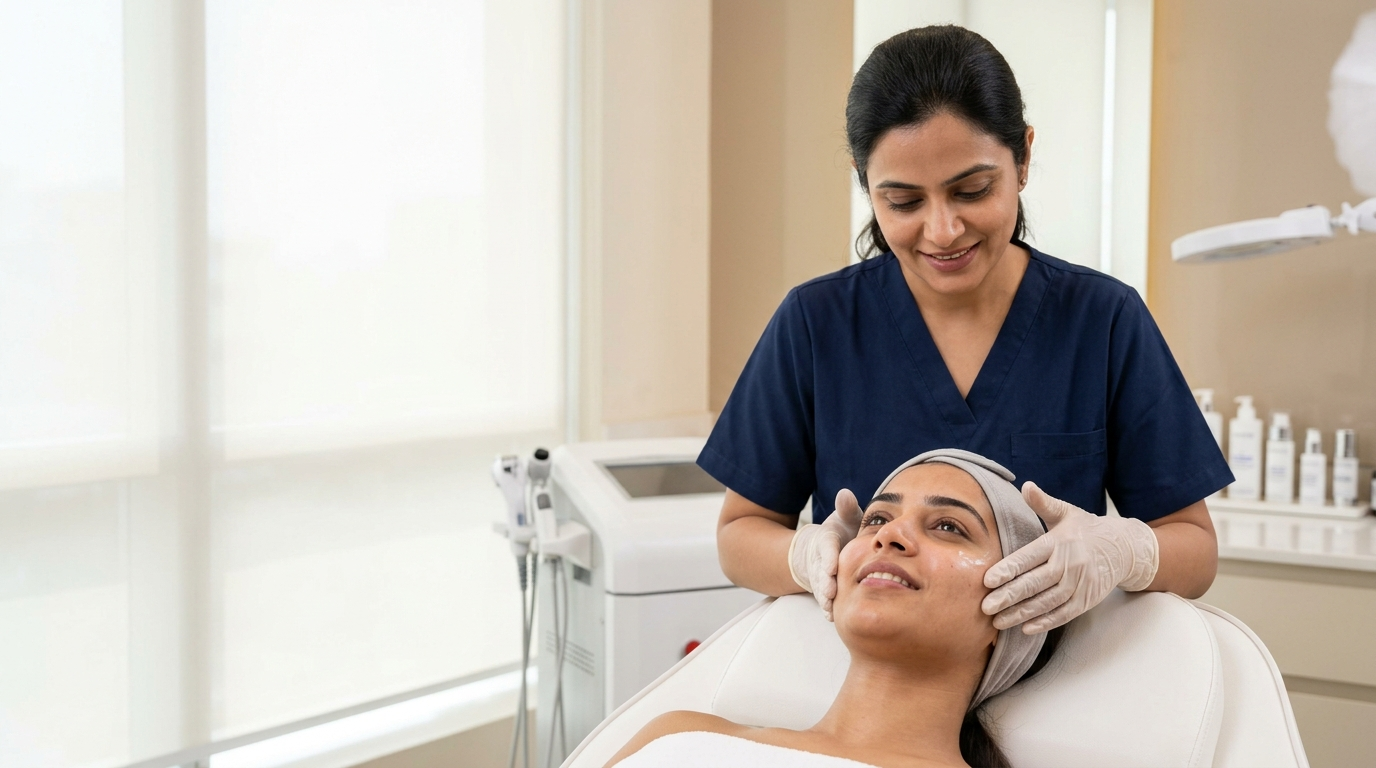
It gets mentioned by skincare influencers, recommended by dermatologists, and offered at nearly every serious skin clinic now, yet the term itself gets thrown around loosely enough that people often can't say what makes it different from the facial they've been getting at a salon for years.
That confusion is fair. A regular facial and a medifacial can look similar on the surface — both involve cleansing, some kind of mask, and a bit of pampering. But what happens underneath that surface, and what results you can actually expect, are two very different things.
What Exactly Is a Medifacial?
A medifacial, short for medical facial, is a skin treatment performed using clinical-grade products and techniques under the supervision of a dermatologist or trained skin professional, rather than a beautician. Unlike a spa facial, which is mostly about relaxation and temporary glow, a medifacial is designed to address specific skin concerns — acne, dullness, pigmentation, early signs of aging, or clogged pores — using ingredients and tools that go beyond what's available in a regular salon setting.
The word "medical" in medifacial isn't just marketing. These treatments typically use higher concentrations of active ingredients like salicylic acid, glycolic acid, vitamin C, or peptides, sometimes combined with technology like LED light therapy, microdermabrasion, or controlled chemical exfoliation. Because these actives are stronger, the treatment needs to be customised to the person's skin type and concern, which is why it's usually done in a clinical setting rather than a general beauty parlour.
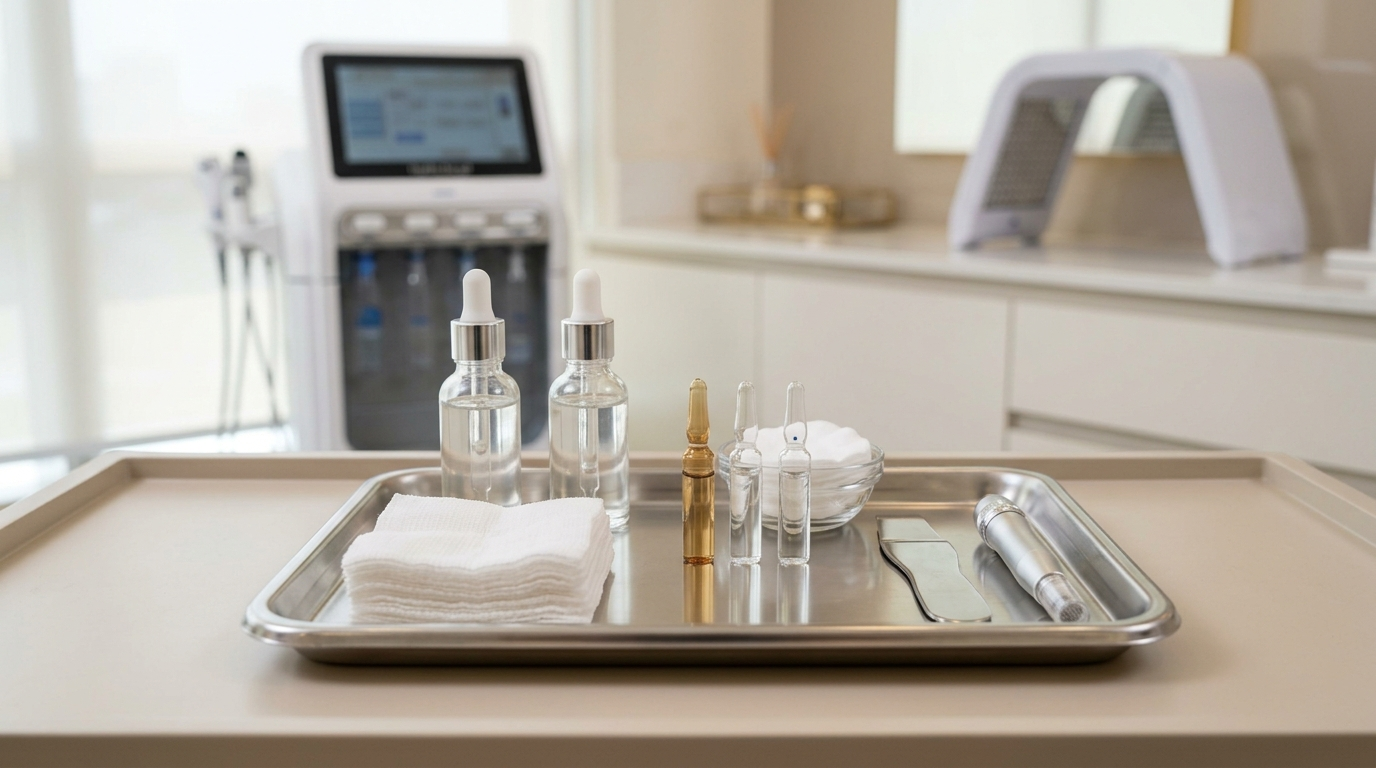
Clinical-strength actives, a proper skin assessment, and a protocol customised to your skin type — not a one-size-fits-all routine repeated on every client.
How Is a Medifacial Different From a Regular Facial?
A salon facial is largely standardised. The same steps get repeated for most clients regardless of skin type — cleansing, scrubbing, steaming, a mask, and a massage. It feels good and gives a temporary glow, but the effect fades within a few days because it doesn't really change anything at the cellular level.
A medifacial starts with an actual skin assessment. What works for oily, acne-prone skin is different from what works for dry, sensitive, or pigmented skin, and the products and techniques used are adjusted accordingly. The exfoliation is more targeted, the actives penetrate deeper, and the goal isn't just a temporary glow — it's measurable improvement in specific concerns over a series of sessions.
Who Actually Benefits From a Medifacial?
People dealing with dull, tired-looking skin from pollution and sun exposure see some of the fastest visible improvement, since medifacials are particularly good at clearing out surface buildup and boosting circulation. Beyond that, it helps in a few other common situations.
It's worth being honest about what it isn't suited for too. Deep acne scarring, severe active cystic acne, or advanced pigmentation usually need a different treatment plan altogether — a medifacial can support that plan, but it's rarely the standalone fix for those specific concerns.
What Happens During a Medifacial Session
The process usually starts with double cleansing to remove surface dirt and makeup residue, followed by a skin analysis where the practitioner identifies the primary concern — dullness, breakouts, pigmentation, or dehydration — and chooses the right combination of actives for that session.
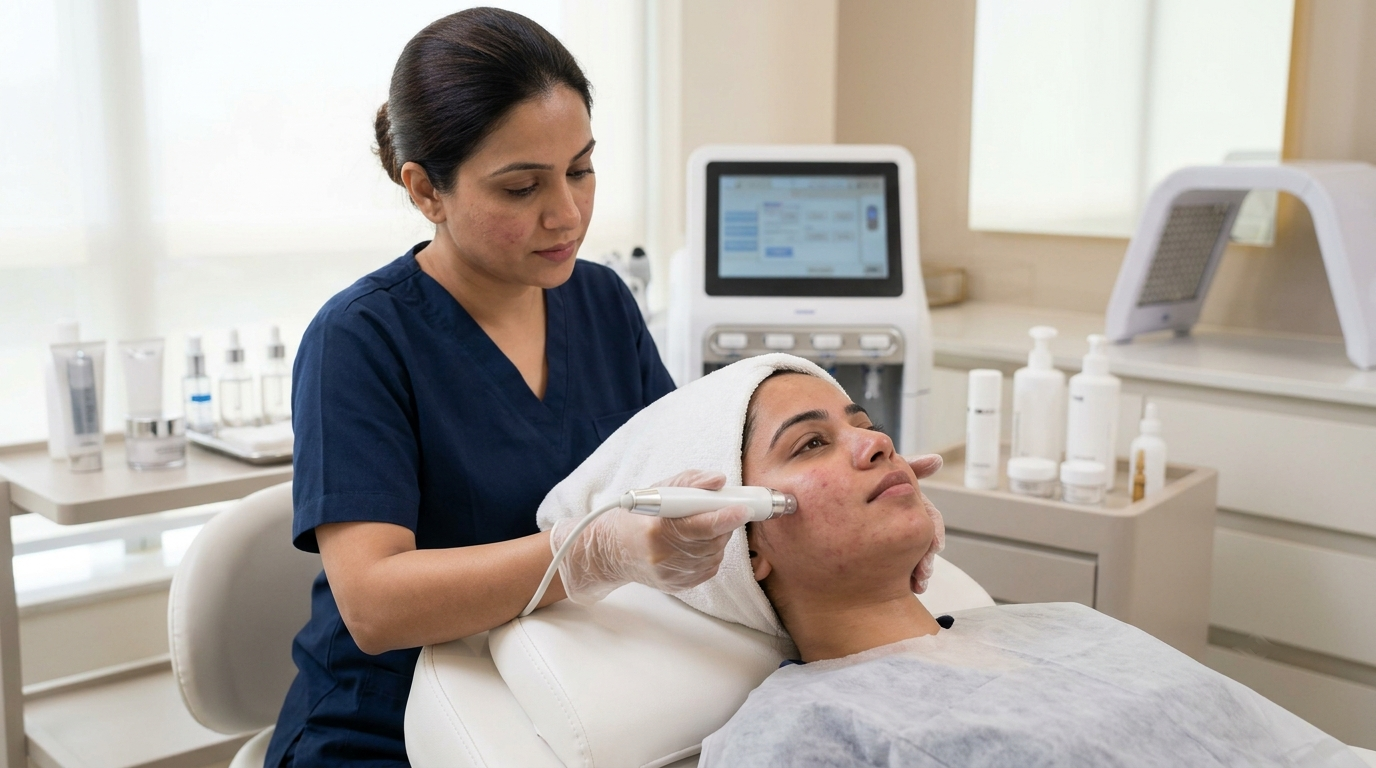
Next comes exfoliation, which is typically more thorough than a regular facial. This might involve a chemical exfoliant, microdermabrasion, or a combination depending on skin sensitivity. This step clears out dead skin cells and unclogs pores, which is also what allows the next products to actually absorb properly instead of sitting on the surface.
After exfoliation, a treatment serum or mask suited to the skin concern is applied — brightening actives for dullness, calming actives for sensitive or acne-prone skin, hydrating actives for dry skin. Some clinics follow this with LED therapy or a light massage to boost absorption and circulation. The session usually wraps up with sunscreen application, since skin is more sensitive to UV exposure immediately after exfoliation.
A single session generally takes 45 minutes to an hour, depending on the specific protocol used for your skin concern.
What Results Can You Actually Expect?
This is where expectations need to be realistic. A single medifacial session does give a visible glow and smoother texture almost immediately, which is why it's popular before events like weddings or important occasions. But for concerns like pigmentation, acne marks, or early aging, one session is a starting point, not a complete solution.
Most dermatologists recommend a series of sessions, usually spaced two to four weeks apart, to see meaningful, lasting change in skin texture, tone, and clarity. Skin cell turnover takes time, and pushing for faster results with more aggressive exfoliation usually backfires, causing irritation rather than improvement.
Common Mistakes People Make With Medifacials
Treating a medifacial like a one-time fix rather than part of an ongoing skin plan. Someone gets one session, sees a nice glow, and assumes their pigmentation or acne is now handled — then feels let down a month later when the underlying concern resurfaces, simply because they stopped after the very first step.
Going to unqualified places that use the term "medifacial" loosely without actually using clinical-grade products or proper skin assessment. Since the term itself isn't strictly regulated, some salons market a slightly upgraded regular facial as a medifacial, using the same generic products for every client regardless of skin type. That defeats the entire purpose of the treatment.
Skipping sunscreen afterward. Since exfoliation temporarily increases skin sensitivity to UV rays, going out unprotected right after a session — something quite easy to do carelessly in Bhubaneswar's sun — can actually worsen pigmentation instead of improving it.
Best Practices Before and After a Medifacial
Before Your Session
It helps to avoid using strong actives like retinol or fresh chemical peels for a couple of days beforehand, since layering too many exfoliating steps close together increases the risk of irritation. It's also worth mentioning any recent sun exposure, medications, or skin reactions to the practitioner so the treatment can be adjusted accordingly.
After Your Session
Skin is more sensitive than usual for a day or two. Strict sunscreen use, avoiding harsh scrubs or active ingredients for at least 48 hours, and keeping the skin well-moisturised all help the results last longer and reduce the chance of irritation.
An Expert's Perspective
In clinical practice, the patients who see the best long-term results from medifacials aren't the ones chasing a single dramatic transformation — they're the ones who treat it as maintenance, coming in every few weeks as part of an ongoing routine rather than a one-off fix before an event. The skin responds best to consistency, not intensity. A gentler medifacial done regularly usually outperforms a single aggressive session, both in results and in how the skin holds up over time.
How a Professional Medifacial Treatment Works at a Clinic
At a proper skin clinic, a medifacial session starts with a dermatologist or trained skin expert actually examining your skin type and concern before choosing the protocol, rather than applying the same routine to every client. The actives, exfoliation intensity, and follow-up recommendations are customised, and the plan usually includes guidance on spacing sessions correctly for your specific skin goal, whether that's tackling dullness, mild acne, early pigmentation, or general skin maintenance.
If you're in Bhubaneswar and want to understand what a properly customised session looks like, it's worth exploring medifacial treatment in Bhubaneswar to see how the protocol is tailored to different skin concerns rather than offered as a one-size-fits-all service.
Inquire About This Service
Ready to See What a Proper Medifacial Feels Like?
If dullness, mild breakouts, or early signs of aging have been bothering you, a medifacial done right — with a real skin assessment behind it — can make a genuine difference over time. Come in for a consultation and we'll walk you through a realistic plan for your skin, no upsell.
Book Free ConsultationFrequently Asked Questions
Is a medifacial the same as a regular facial?
No. A regular facial focuses on relaxation and a temporary glow using standard products for everyone. A medifacial uses clinical-grade actives customised to your specific skin concern, under professional supervision.
How often should I get a medifacial done?
For general maintenance, once every four to six weeks works well for most skin types. For active concerns like acne or pigmentation, a dermatologist may recommend sessions every two to three weeks for a defined period.
Does a medifacial hurt?
Most medifacials involve mild tingling or a slight warm sensation during exfoliation, but they're not typically painful. Sensitive skin may experience temporary redness, which usually settles within a few hours.
Can I wear makeup after a medifacial?
It's best to avoid makeup for at least 24 hours after a session to let the skin breathe and absorb the treatment fully, and to reduce the risk of clogging freshly exfoliated pores.
Is a medifacial suitable for acne-prone skin?
Yes, in most cases, though the protocol needs to be gentler and specifically suited to active acne rather than using strong exfoliants that could irritate inflamed skin. This is exactly why professional assessment matters before starting.
How soon will I see results after a medifacial?
A visible glow and smoother texture are usually noticeable right after the first session. Deeper concerns like pigmentation or acne marks typically need multiple sessions over several weeks to show real improvement.