
Crown Hair Transplant: Grafts, Cost and Results for a Thinning Crown
Crown thinning is easy to miss. You cannot see the top of your own head in the mirror, so many people only notice it when a friend mentions it, a barber points it out or a photo is taken from above. By then, the bald spot may already be the size of a coin or larger.
Book Free Consultation
A crown hair transplant can rebuild density in this area, but it is one of the most demanding parts of the scalp to treat. This guide explains why the crown is different, how many grafts it usually needs, what it costs and when you can expect to see the full result. You can also read how we plan every hair transplant at our Bhubaneswar clinic, from graft count to hairline design.
Why the Crown Is Harder to Treat
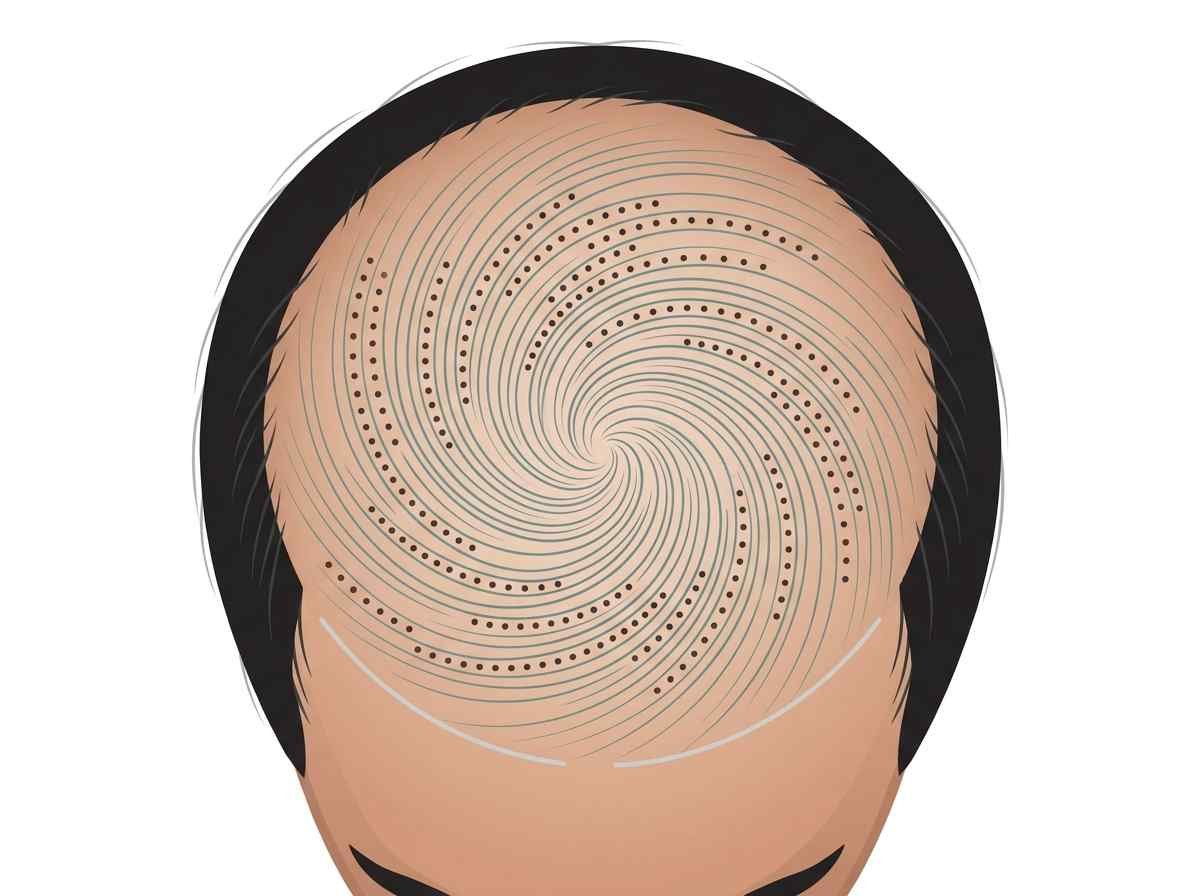
The crown, sometimes called the vertex, sits at the very top and back of the head. Hair here grows outward from a central swirl, and the direction changes all the way around it. To look natural, every graft has to follow that pattern exactly.
The crown is also a large, curved area. It takes more grafts to make a visible difference than the same amount of space at the front, and light reflecting off the curved scalp can make thinning look worse than it is. Finally, crown hair loss often continues to expand over time. A plan that does not allow for this can leave a ring of thinning around the transplanted area a few years later.
Who Is a Good Candidate for a Crown Hair Transplant?
You may be a good candidate if your crown thinning has been stable for a while, your donor area at the back and sides is dense and your frontal hairline is either healthy or already planned for.
The Hairline Usually Comes First
Most doctors prioritise the hairline over the crown. The front frames your face and is what people see first. If donor hair is limited, it is usually wiser to use it at the front and manage the crown with non-surgical treatment.
Age Matters
Younger patients, particularly those under 30, often have crown loss that is still progressing. Transplanting a small crown too early can lead to an isolated island of hair as the bald area widens around it. In these cases, treatments such as PRP therapy and medical therapy may be advised first, with surgery considered once the pattern is clearer.
To understand where your crown loss fits into the wider picture, our guide to the Norwood scale explains each stage of male hair loss.
How Many Grafts Does the Crown Need?
The graft count depends on the size of the bald area, how dense you want it and the quality of your donor hair. The table below gives typical ranges for crown-only treatment.
| Crown Thinning Level | What It Looks Like | Typical Graft Range |
|---|---|---|
| Early thinning | Scalp shows through under bright light | 500 to 1,000 |
| Small bald spot | Coin-sized area at the swirl | 1,000 to 1,500 |
| Moderate crown loss | Palm-sized area, clearly visible | 1,500 to 2,500 |
| Advanced crown loss | Large area joining the top of the head | 2,500 to 3,500 |
For many patients, the crown is treated in the same session as the front, or in a second session once the hairline has matured. Your doctor will balance the grafts between both areas based on your donor supply.
Crown Hair Transplant Cost
Crown hair transplant cost follows the same per-graft model as any other hair transplant. In Bhubaneswar, per-graft rates commonly fall between Rs 20 and Rs 50, depending on the technique and team. Using those rates, a crown needing 1,500 grafts would typically cost between Rs 30,000 and Rs 75,000, and a larger crown of 2,500 grafts between Rs 50,000 and Rs 1,25,000.
Because the crown is a slower, more detailed area to work on, some clinics price crown work slightly higher. Always ask for a written quote that shows the number of grafts, the price per graft and what is included. Our hair transplant cost breakdown explains what to look for in any quote.
How the Procedure Works
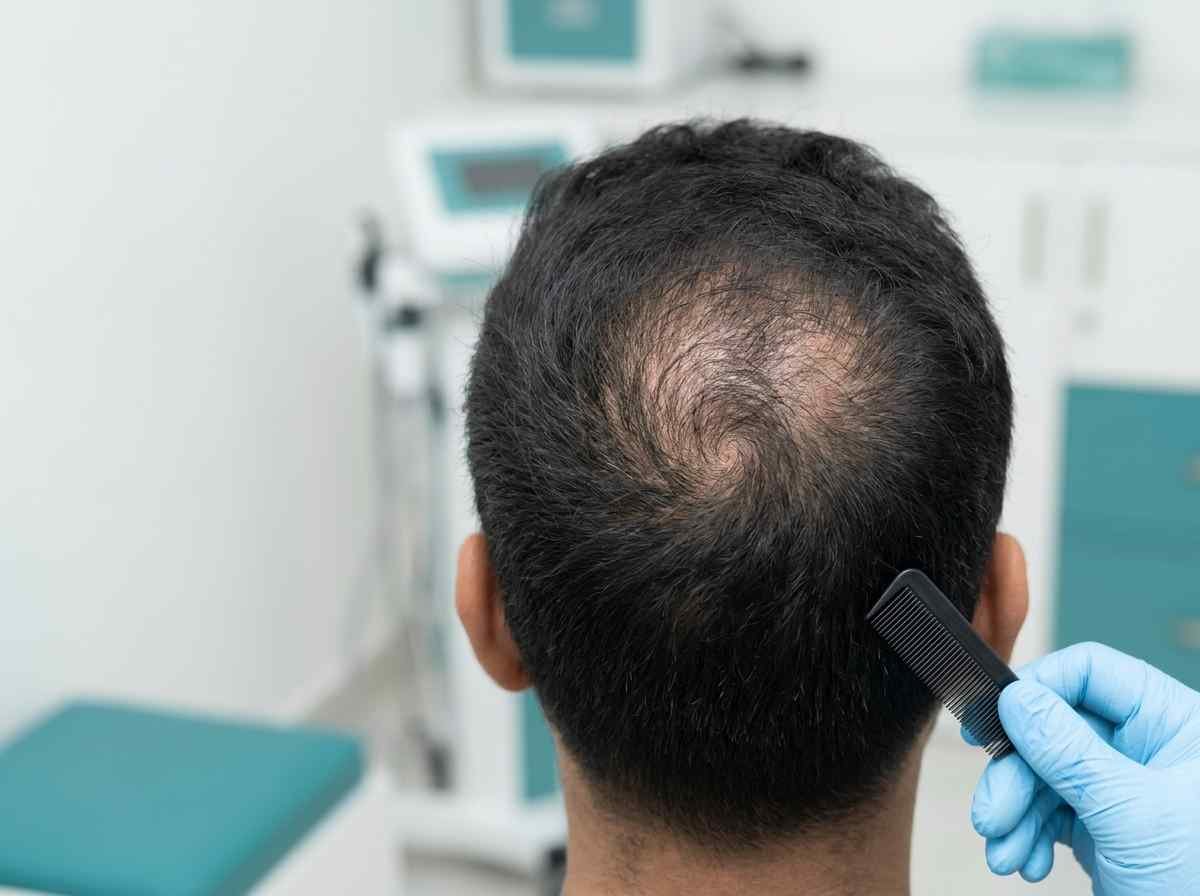
A crown hair transplant is usually done with FUE under local anaesthesia and takes most of a day.
Planning the Swirl
Before any grafts are placed, the doctor maps the natural direction of your crown swirl. The grafts are then placed in a spiral pattern that follows this direction, with single hairs at the outer edge for a soft transition.
Combining with PRP
Many patients benefit from PRP alongside a crown transplant. PRP can help strengthen the surrounding native hair and support healing. This combined PRP and FUE approach is a common choice for crown thickening, especially when the surrounding hair is also starting to thin.
Results Timeline for the Crown
The crown usually takes longer to show results than the hairline. This is normal and is linked to blood supply and the way hair grows outward in this area.
What to Expect Month by Month
Shedding happens between weeks 2 and 6, as with any transplant. New growth often starts around month 4, a little later than the front. By month 8, many patients see clear improvement, and the crown is usually close to final at 12 to 18 months. If you would like a broader view of the whole process, read our guide to hair transplant before and after results.
Protecting the Result
The transplanted hair is resistant to further loss, but the hair around it may not be. Continuing with supportive treatment helps keep the area even. Our hair transplant page explains how we plan for long-term results.
Inquire About This Service
Ready to Take the Next Step?
Book a consultation with our hair restoration specialists. We will examine your crown and donor area, tell you honestly whether surgery or treatment makes more sense right now and give you a clear plan. Reach us at +91 97772 14816.
Book Free ConsultationFrequently Asked Questions
How many grafts are needed for a crown hair transplant?
Most crown cases need between 1,000 and 2,500 grafts. Early thinning may need as few as 500, while advanced crown loss can need 3,000 or more. Your doctor will confirm the number after checking your donor area.
What is the crown hair transplant cost?
Cost depends on the number of grafts and the technique. In Bhubaneswar, with per-graft rates of about Rs 20 to Rs 50, a crown of 1,500 grafts typically costs between Rs 30,000 and Rs 75,000.
Why does the crown take longer to grow after a transplant?
The crown has a different blood supply and a swirl growth pattern, so new hair tends to come through more slowly. Full results can take 12 to 18 months, compared with around 12 months for the hairline.
Can I get the crown and hairline done together?
Yes, if your donor area can supply enough grafts for both. If donor hair is limited, the hairline is usually given priority and the crown is treated later or with non-surgical options.
Is a crown hair transplant worth it?
For the right candidate, yes. It can restore density and confidence. It works best when crown loss has stabilised, donor hair is good and the plan allows for future thinning.
Pingback: Norwood Scale Explained: Hair Loss Stages & Grafts Needed
Pingback: Hair Transplant Before & After: 3, 6 and 12 Months | Hair Reborn