
FUE vs FUT Hair Transplant: Which Method Is Right for You?
FUE or FUT hair transplant? Compare the two most popular techniques by cost, scarring, recovery, and results. Find out which one suits your hair loss pattern.
If you have started researching hair transplant options, you have almost certainly come across two abbreviations: FUE and FUT. These are the two most widely used techniques for hair restoration, and choosing between them is one of the first decisions you will need to make. But the choice is not always straightforward, and what works for one person may not be the right fit for another.
Both FUE (Follicular Unit Extraction) and FUT (Follicular Unit Transplantation) aim to achieve the same result: moving healthy hair follicles from a donor area, usually the back and sides of the head, to thinning or balding areas. The difference lies in how those follicles are harvested. And that difference affects everything from scarring and recovery time to cost and the total number of grafts that can be collected in a single session.

This guide compares the two methods in detail, so you can walk into your consultation with a clear understanding of what each technique involves and which one is more likely to suit your specific situation.
What Is FUT (Follicular Unit Transplantation)?
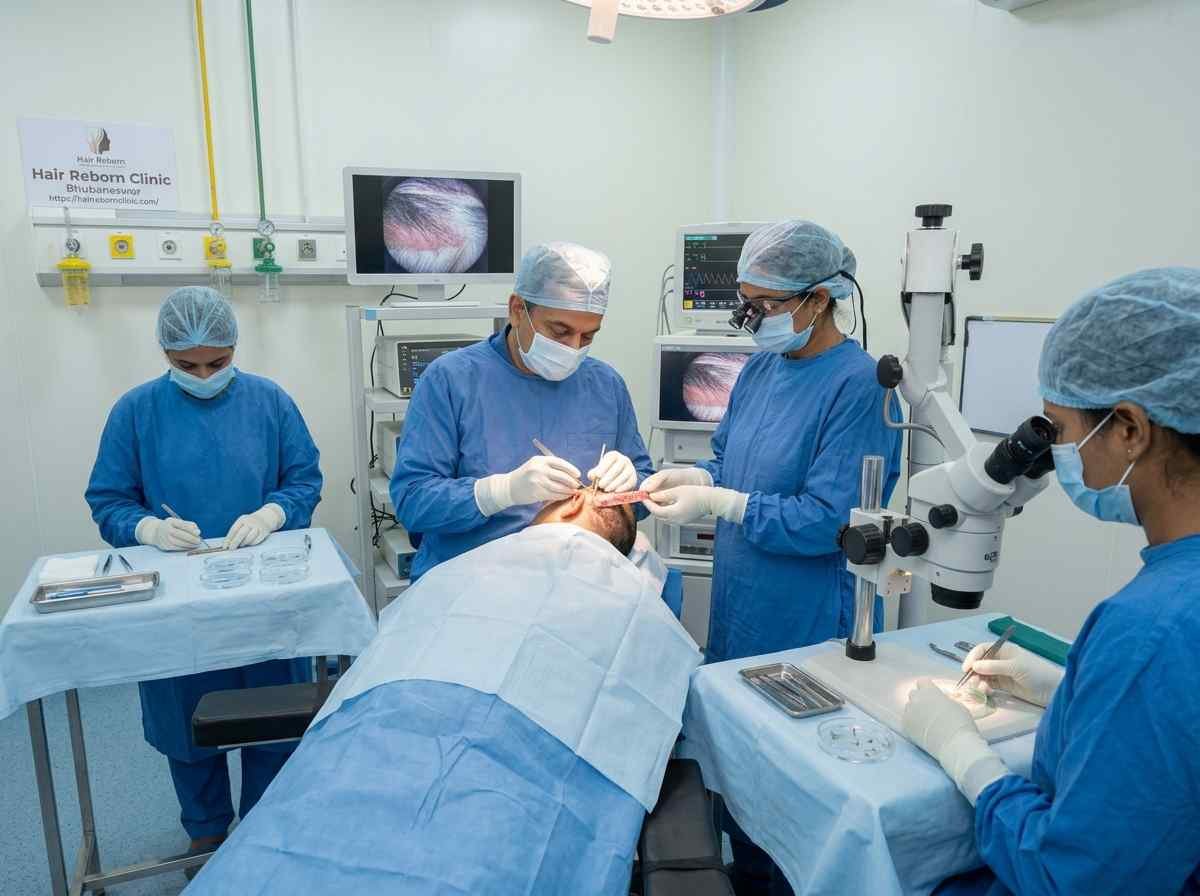
FUT, also known as the strip method, involves removing a narrow strip of scalp from the donor area at the back of the head. This strip is then dissected under a microscope into individual follicular units, each containing one to four hairs. These units are then implanted into the recipient area where hair is thinning or absent.
The main advantage of FUT is that it allows for a large number of grafts to be harvested in a single session, often 3,000 to 4,000 grafts. This makes it a strong option for patients with advanced hair loss who need maximum coverage. The procedure is also generally faster and more cost-effective on a per-graft basis compared to FUE.
The tradeoff is the scar. FUT leaves a linear scar across the back of the head. While a skilled surgeon can make this scar thin and easy to conceal under moderate hair length, it will always be there. For patients who prefer to wear their hair very short, this can be a concern.
What Is FUE (Follicular Unit Extraction)?
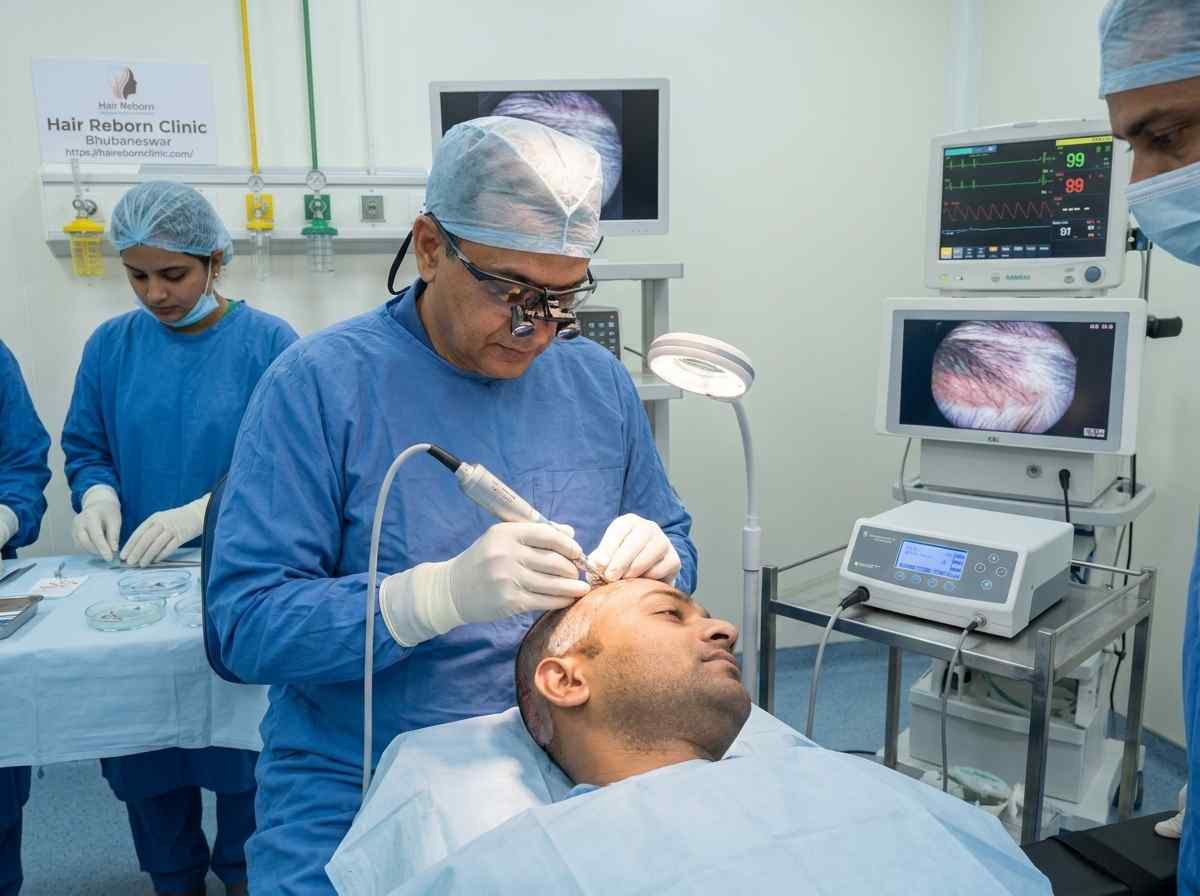
FUE is a technique where individual follicular units are extracted directly from the scalp using a tiny circular punch tool, typically 0.6 to 1.0 mm in diameter. Each graft is removed one at a time, leaving behind tiny dot-like scars that are virtually invisible once healed.
The absence of a linear scar is the biggest draw of FUE. Patients who want the freedom to wear their hair short without worrying about a visible scar often prefer this method. FUE is also less invasive in terms of the donor area, as there is no need for sutures or staples.
However, FUE takes longer. Extracting grafts one by one is a more time-consuming process, and this is reflected in the higher per-graft cost. In a single session, FUE typically yields 2,000 to 3,000 grafts, though experienced surgeons can sometimes exceed this.
FUE vs FUT: A Detailed Comparison
| Factor | FUT (Strip Method) | FUE (Extraction) |
|---|---|---|
| Scarring | Linear scar at donor area | Tiny dot scars, nearly invisible |
| Grafts Per Session | 3,000 - 4,000+ | 2,000 - 3,000 (can go higher) |
| Recovery Time | 10 - 14 days | 7 - 10 days |
| Cost Per Graft | Rs 15 - 30 | Rs 25 - 50 |
| Pain Level | Moderate (due to strip removal) | Mild to moderate |
| Best For | Advanced hair loss, budget-conscious | Minimal scarring preference, early to moderate loss |
| Hair Length After | Can cover scar with moderate length | Can wear hair very short |
Scarring: The Most Visible Difference
Scarring is often the deciding factor for many patients. With FUT, the linear scar runs horizontally across the back of the head. Its visibility depends on how the wound heals and how the surgeon closes it. Trichophytic closure, a technique where hair is allowed to grow through the scar line, can reduce its visibility significantly. Still, patients who keep their hair cropped close will likely see the scar.
FUE scars are scattered, small, and circular. They blend into the surrounding skin and hair within weeks. Even with a buzzed head, FUE scars are difficult to spot without close inspection. This makes FUE the preferred choice for younger patients and those who value flexibility in hairstyle.
Recovery and Downtime
Recovery after FUT takes slightly longer. The donor area needs time to heal from the strip removal, and sutures or staples are typically removed after 10 to 14 days. Some patients experience tightness or discomfort at the donor site during the first week.
FUE recovery is generally quicker. Since there are no stitches, most patients can resume light activities within three to five days. The tiny extraction wounds heal on their own, and discomfort is usually manageable with over-the-counter pain medication.
Regardless of the technique, the transplanted area follows a similar healing timeline. The newly implanted grafts go through a shedding phase around two to four weeks post-surgery, and new hair growth typically becomes visible from the third month onward. Full results take 10 to 14 months.
Cost Comparison
Cost is a practical consideration, and here FUT has a clear advantage. Because the strip method is faster and requires less surgical time, the per-graft cost is lower. In Bhubaneswar, FUT grafts typically cost between Rs 15 and Rs 30 per graft, while FUE grafts range from Rs 25 to Rs 50.
For a patient needing 2,500 grafts, the difference could be Rs 20,000 to Rs 40,000 or more. This gap widens with larger graft counts. However, if scarring is a concern and you are willing to invest more for a less visible donor area, FUE may be worth the additional cost.
Ready to Take the Next Step?
Book a consultation with our hair restoration specialists. Bring your questions, and we will walk you through the options that suit your hair loss.
Schedule Your ConsultationReach us at +91 97771 75524
Which Technique Should You Choose?
The right technique depends on your hair loss pattern, your expectations, your budget, and your lifestyle. Here are some general guidelines.
Ultimately, the best choice is one made in consultation with an experienced hair transplant surgeon who can evaluate your donor area, assess your hair loss pattern, and recommend the technique that will give you the most natural and lasting result.
Can You Combine FUE and FUT?
Yes. Some surgeons recommend a combined approach, especially for patients with advanced hair loss who need a very high number of grafts. In this scenario, a strip is taken via FUT to harvest a large batch of grafts, and FUE is used to supplement from other areas of the scalp or body. This combination maximizes the total graft yield while distributing the extraction across a wider donor area.
The combined approach is not suitable for everyone, but it is worth discussing with your surgeon if you are at Norwood Grade 5 or beyond and want comprehensive coverage.
Frequently Asked Questions
Is FUE more painful than FUT?
Most patients report that FUE is slightly less painful overall because there is no strip removal or suturing. Both techniques use local anesthesia during the procedure, so the surgery itself is not painful. Post-operative discomfort is generally mild with FUE and moderate with FUT.
Which technique gives more natural-looking results?
Both FUE and FUT can deliver equally natural results when performed by a skilled surgeon. The naturalness of the outcome depends more on the implantation angle, direction, and density than on the harvesting method.
Can I switch from FUT to FUE for a second session?
Yes. Many patients who had FUT in their first session opt for FUE in subsequent sessions. The existing linear scar does not prevent FUE extraction from the surrounding donor area.
How do I know how many grafts I need?
The number of grafts depends on the area of hair loss, the density you want, and the quality of your donor hair. A proper scalp analysis and consultation with a hair transplant specialist will give you an accurate estimate.