
Post-Acne Skincare Routine: How to Heal Your Skin and Prevent Scars
Struggling with post-acne marks and scars? Build a complete skincare routine to heal acne damage, fade dark spots, and prevent future breakouts.
Clearing active acne is only half the battle. For many people, the real frustration begins after the breakouts have subsided, when dark spots, uneven texture, and stubborn scars remain. These post-acne marks can linger for months or even years if they are not addressed properly.
The good news is that a well-structured post-acne skincare routine can significantly speed up healing, fade pigmentation, and improve overall skin texture. But this routine needs to be deliberate. Randomly applying products or over-treating your skin can make things worse rather than better.
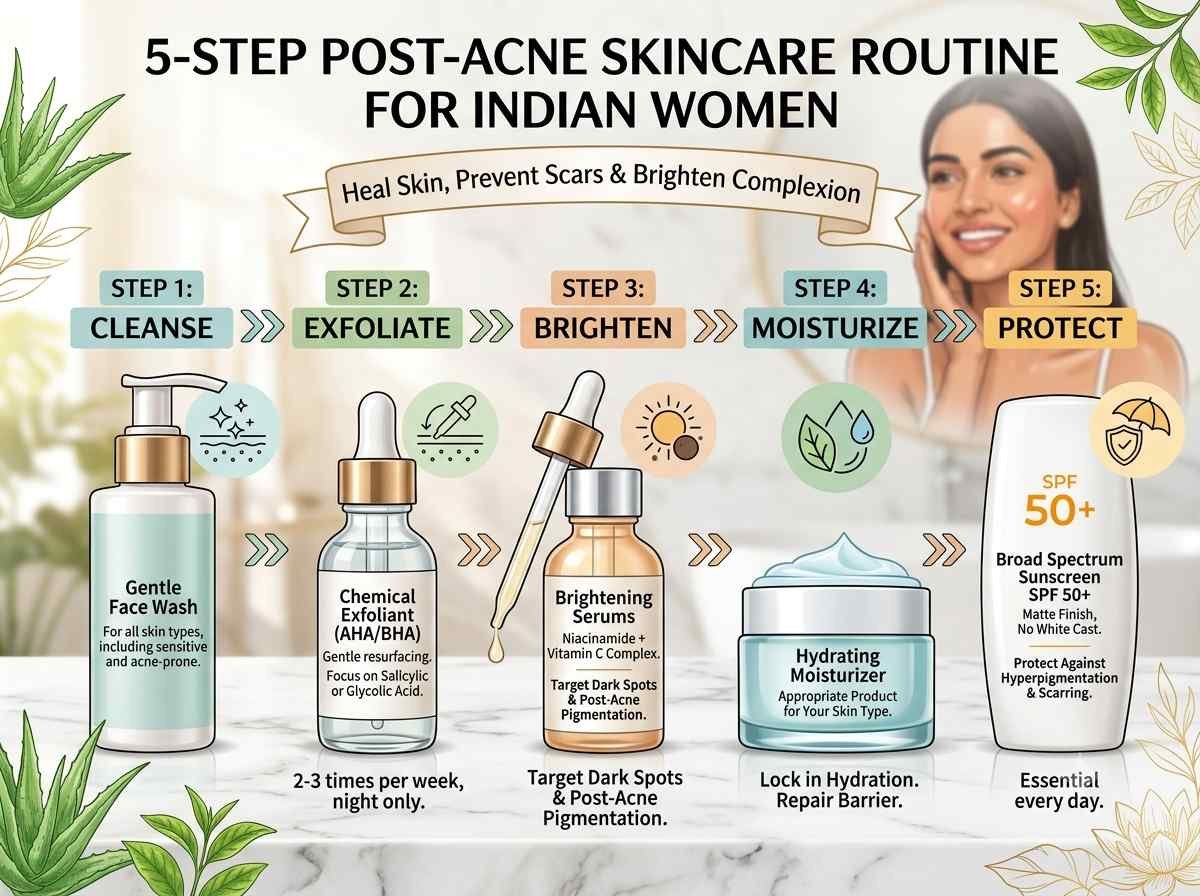
This guide outlines a complete post-acne skincare routine, explains why each step matters, and covers the ingredients and habits that will give your skin the best chance to recover. Whether you are dealing with post-inflammatory hyperpigmentation, shallow scarring, or rough texture, this routine will help.
Understanding Post-Acne Marks vs Acne Scars
Before building a routine, it helps to know what you are dealing with. Post-acne marks and acne scars are not the same thing, and they respond to different treatments.
Post-inflammatory hyperpigmentation (PIH) refers to the dark spots or discoloration left behind after a pimple heals. These marks are flat and typically appear as brown, red, or purplish patches depending on your skin tone. PIH is not true scarring; it is a pigmentation response. With the right products and patience, these marks can fade completely over time.
Acne scars, on the other hand, involve actual changes in the skin texture. They are caused by damage to the deeper layers of the skin during severe or prolonged acne. Acne scars come in several forms: ice pick scars (narrow, deep holes), boxcar scars (broad, rectangular depressions), and rolling scars (wave-like undulations). True acne scars usually require professional treatments like chemical peels, microneedling, or laser therapy to improve.
Your post-acne skincare routine should address both pigmentation and texture, but the approach and ingredients differ for each.
Step 1: Gentle Cleansing
The foundation of any post-acne routine is a gentle, non-stripping cleanser. Your skin is in recovery mode, and the last thing it needs is a harsh cleanser that strips away its natural moisture barrier.
Choose a mild, pH-balanced cleanser that removes dirt, oil, and sunscreen without leaving your skin feeling tight or dry. Look for formulations that are fragrance-free and free from sodium lauryl sulfate. Gel-based cleansers work well for oily skin, while cream-based cleansers are better for dry or combination skin.
Wash your face twice a day, morning and night. Over-washing can irritate healing skin, and under-washing can allow oil and bacteria to accumulate. Lukewarm water is ideal; very hot water can aggravate inflammation.
Step 2: Exfoliation (But Not Too Much)
Exfoliation helps remove dead skin cells that can make post-acne marks appear more prominent and dull. It also promotes cell turnover, which speeds up the fading of dark spots.
Chemical exfoliants are generally safer and more effective than physical scrubs for post-acne skin. AHAs (alpha hydroxy acids) like glycolic acid and lactic acid work on the skin surface to brighten and smooth. BHAs (beta hydroxy acids) like salicylic acid penetrate deeper into pores and are helpful if you still get occasional breakouts alongside post-acne marks.
Start with a low concentration, around 5 to 8 percent glycolic acid or 1 to 2 percent salicylic acid, two to three times per week. Gradually increase the frequency as your skin builds tolerance. Over-exfoliating can damage the moisture barrier and worsen pigmentation, so more is not better here.
Step 3: Targeted Treatments

This is where you address specific concerns like dark spots and uneven texture. The right active ingredients can make a measurable difference in how quickly your skin recovers.
Step 4: Moisturize
Post-acne skin needs hydration, even if your skin type is oily. A good moisturizer replenishes the moisture barrier, prevents transepidermal water loss, and creates a protective layer over the active treatments you have applied.
Look for moisturizers containing ceramides, hyaluronic acid, or squalane. These ingredients hydrate without clogging pores. Avoid heavy, comedogenic moisturizers that could trigger new breakouts. A lightweight, gel-based moisturizer is usually the best option for oily and acne-prone skin types.
Step 5: Sun Protection
Sunscreen is the single most important step in a post-acne routine. UV exposure darkens post-inflammatory hyperpigmentation and slows the fading process. Without daily sun protection, all the brightening serums and exfoliants in the world will not make a meaningful difference.
Use a broad-spectrum sunscreen with SPF 30 or higher every single day, even on cloudy days and even if you are staying indoors near windows. Reapply every two to three hours if you are outdoors. Choose a non-comedogenic, lightweight formula that does not leave a heavy white cast or feel greasy on the skin.
Morning vs Night Routine
| Step | Morning Routine | Night Routine |
|---|---|---|
| 1 | Gentle cleanser | Gentle cleanser (double cleanse if wearing sunscreen) |
| 2 | Vitamin C serum or Niacinamide serum | Exfoliant (AHA/BHA, 2-3 times/week) |
| 3 | Moisturizer | Retinoid (alternate nights, if using) |
| 4 | Sunscreen (SPF 30+) | Moisturizer |
Ready to Take the Next Step?
Book a consultation with our skin specialists for a personalised plan based on your skin type and concerns.
Schedule Your ConsultationReach us at +91 97771 75524
Common Mistakes to Avoid
When to See a Dermatologist
If your post-acne marks are deep, widespread, or have not improved after three to four months of consistent at-home care, it may be time to consult a dermatologist. Professional treatments can address issues that topical products cannot.
Chemical peels, microneedling, PRP therapy, and laser treatments are all effective options for treating stubborn pigmentation and textural scarring. A dermatologist can assess your skin, determine the type of scarring you have, and recommend a treatment plan tailored to your needs.
Frequently Asked Questions
How long does it take for post-acne marks to fade?
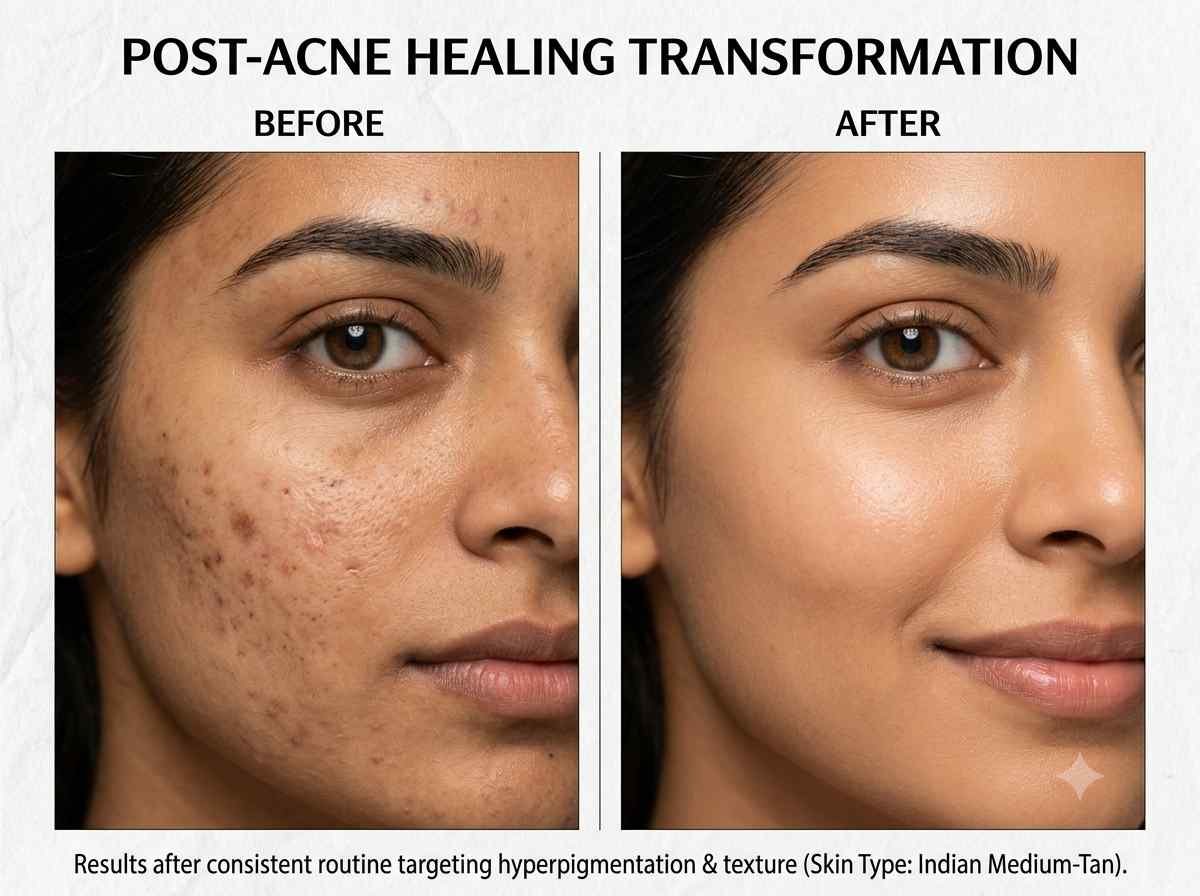
Post-inflammatory hyperpigmentation typically fades within three to six months with consistent skincare. Deeper pigmentation or acne scars may take longer and may require professional treatment to improve significantly.
Can I use vitamin C and niacinamide together?
Yes. Despite an old myth that they cancel each other out, vitamin C and niacinamide can be used together safely and effectively. Many modern formulations include both ingredients.
Will my acne scars go away completely?
Flat pigmentation marks (PIH) can fade completely with the right routine and time. Textural scars (ice pick, boxcar, rolling) may improve significantly but are unlikely to disappear entirely without professional treatment.
Is it safe to use retinol on acne-prone skin?
Yes. Retinol is actually beneficial for acne-prone skin. It helps unclog pores, accelerates cell turnover, and fades post-acne marks. Start with a low concentration and increase gradually to avoid irritation.