
Hair Transplant Recovery Timeline: What to Expect from Day 1 to Month 12
What happens after a hair transplant? Follow this detailed recovery timeline from day 1 to month 12. Learn what to expect at each stage of healing.
A hair transplant is not an overnight fix. While the surgery itself takes just a few hours, the recovery and final result unfold over several months. Understanding this timeline is essential because it sets the right expectations and helps you avoid unnecessary panic during normal phases like shedding or slow growth.
Many patients walk into the procedure expecting fast, dramatic results. When they see shedding at week three or minimal visible change at month two, anxiety sets in. In most cases, this worry is unfounded. The hair growth cycle after a transplant follows a predictable pattern, and patience is as important as the surgery itself.

This guide covers the entire recovery timeline in detail, from the first 24 hours after surgery to the one-year mark when final results are typically visible. Knowing what lies ahead at each stage will help you prepare mentally, follow post-operative instructions more carefully, and feel more confident throughout the process.
- Day 1 to Day 3: The Immediate Recovery Phase
- Day 4 to Day 7: Scab Formation and Initial Healing
- Week 2 to Week 4: Shedding Phase (Shock Loss)
- Month 2 to Month 4: The Dormant Phase
- Recovery Timeline at a Glance
- Month 5 to Month 7: New Growth Becomes Visible
- Month 8 to Month 12: The Final Stretch
- Tips for a Smoother Recovery
- Frequently Asked Questions
Day 1 to Day 3: The Immediate Recovery Phase
The first three days are the most sensitive period after a hair transplant. The transplanted grafts are not yet firmly anchored, and the scalp is tender and swollen.
On day one, you will likely leave the clinic with a light bandage over the donor area. Some clinics apply a headband to manage forehead swelling. You may experience mild discomfort, tightness, or a throbbing sensation at the donor and recipient sites. Prescribed painkillers and anti-inflammatory medication will keep this manageable.
By day two and three, swelling may increase, sometimes extending to the forehead and around the eyes. This is a normal inflammatory response and subsides within a few days. Sleeping in a semi-upright position with your head elevated helps reduce swelling. Avoid touching, scratching, or rubbing the transplanted area. Even light pressure can dislodge a graft at this stage.
Day 4 to Day 7: Scab Formation and Initial Healing
Small scabs begin forming around each transplanted graft site. This is a natural part of healing and indicates that the grafts are settling in. The scabs typically look like tiny reddish-brown crusts scattered across the recipient area.
Most clinics allow gentle hair washing from day three or four onward, using a mild, prescribed shampoo. Washing helps soften and gradually remove the scabs without dislodging the grafts. Follow your surgeon's specific instructions on washing technique, as being too rough can cause damage while being too cautious can lead to infection.
By the end of the first week, the donor area will start to feel less sore. If you had FUT, the sutures or staples will still be in place and may cause mild itching. FUE patients typically heal faster in the donor area, with the small extraction wounds closing up within five to seven days.
Week 2 to Week 4: Shedding Phase (Shock Loss)
This is the phase that catches many patients off guard. Around two to four weeks after the procedure, the transplanted hairs begin to fall out. This shedding, known as shock loss or telogen effluvium, is completely normal and expected.
What is happening is that the transplanted hair follicles are entering a resting phase. The hair shafts that were implanted during surgery are pushed out as the follicle resets itself beneath the skin. The roots remain intact and will produce new hair in the coming months.
Do not panic during this phase. Almost every hair transplant patient goes through it. Some patients lose nearly all the transplanted hair during this period, and it can feel discouraging. But the follicle is alive and simply preparing for its next growth cycle. This is a sign that the body is responding normally.
Month 2 to Month 4: The Dormant Phase
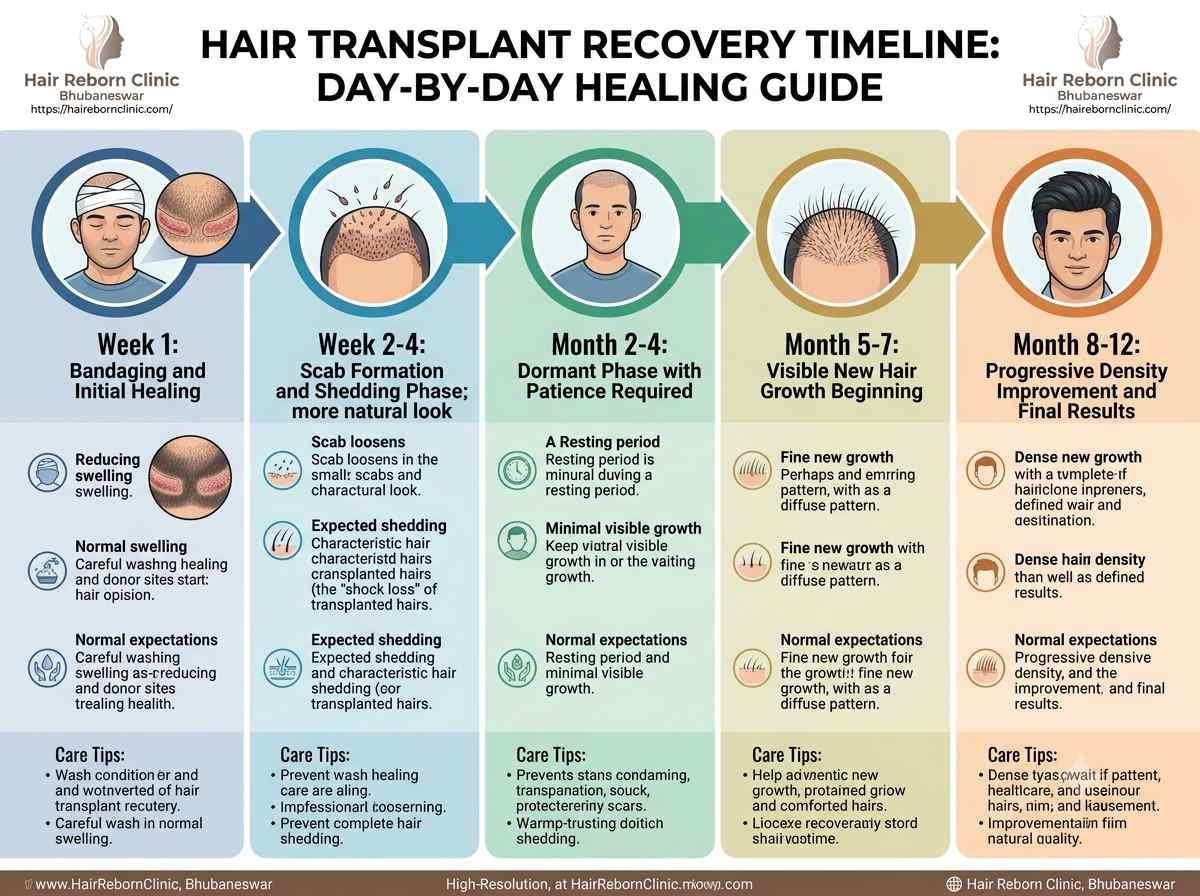
After shedding, the scalp enters a dormant period. Externally, there may be little visible change. The transplanted area might look similar to how it did before the procedure, or even slightly worse due to the shedding. This is the hardest phase psychologically, and it requires patience.
Beneath the surface, however, the transplanted follicles are regenerating. New hair is forming inside the follicle and will eventually push through the scalp. Some patients begin to see fine, thin hairs emerging around the third month. These early hairs are often lighter in color and thinner in texture, which is perfectly normal. They will thicken and darken over time.
Continue following your post-operative care routine during this period. Avoid harsh chemical treatments, excessive sun exposure, and any activity that could irritate the scalp.
Recovery Timeline at a Glance
| Time Period | What Happens | What to Do |
|---|---|---|
| Day 1 - 3 | Swelling, mild pain, grafts settling | Rest, sleep elevated, take prescribed meds |
| Day 4 - 7 | Scab formation, donor healing begins | Start gentle washing, avoid scratching |
| Week 2 - 4 | Shedding of transplanted hair | Do not panic, this is normal |
| Month 2 - 4 | Dormant phase, early thin growth | Be patient, protect scalp from sun |
| Month 5 - 7 | Visible new growth, hair thickens | Continue care, observe progress |
| Month 8 - 10 | Significant coverage, texture improves | Styling possible, regular trims |
| Month 10 - 12 | Final result visible | Follow-up with surgeon for assessment |
Ready to Take the Next Step?
Book a consultation with our hair restoration specialists. Bring your questions, and we will walk you through the options that suit your hair loss.
Schedule Your ConsultationReach us at +91 97771 75524
Month 5 to Month 7: New Growth Becomes Visible
This is when things start to get exciting. Between the fifth and seventh month, new hair growth becomes clearly visible. The transplanted follicles are now actively producing hair, and you will notice increasing density in the recipient area.
The new hair may still be thinner or lighter than your native hair, but it is growing. Each month brings a noticeable improvement. Patients who were discouraged during the dormant phase often begin to feel optimistic at this stage.
At this point, you can resume most normal activities. Vigorous exercise, swimming, and sun exposure are generally safe, though sunscreen or a hat is recommended to protect the scalp. Your surgeon may recommend a follow-up visit around the six-month mark to assess progress.
Month 8 to Month 12: The Final Stretch
From the eighth month onward, the transplanted hair continues to thicken, darken, and blend with your existing hair. Coverage improves noticeably, and you can begin styling your hair in ways that were not possible before the procedure.
By the 10th to 12th month, most patients see their final result. The hair has reached a stable growth pattern, and the density is at its peak. Some patients continue to see minor improvements up to 18 months post-transplant, particularly in terms of texture and thickness.
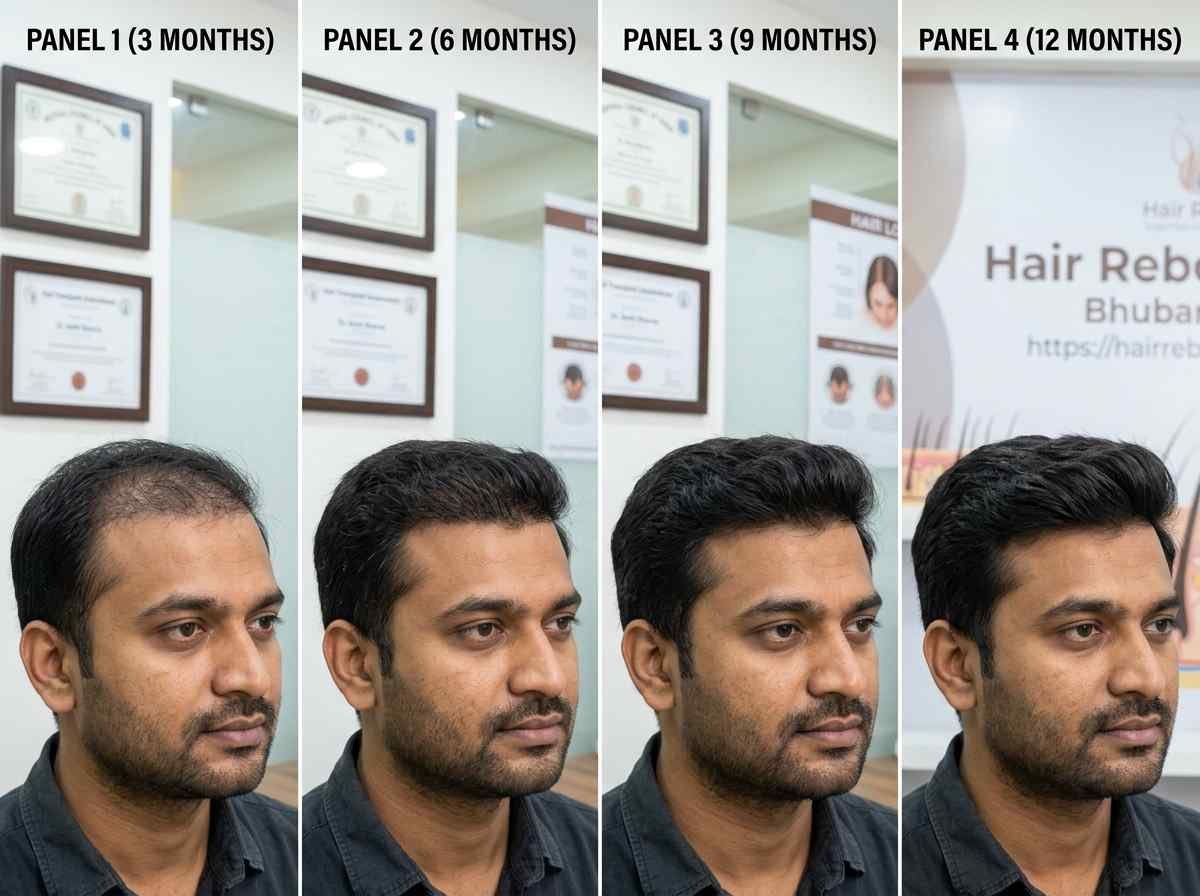
Schedule a final follow-up with your surgeon at the one-year mark. This appointment allows both of you to evaluate the outcome, compare it against the pre-operative plan, and discuss whether any additional sessions are needed for extra density or coverage in other areas.
Tips for a Smoother Recovery
Frequently Asked Questions
When can I go back to work after a hair transplant?
Most patients can return to desk-based work within three to five days. If your job involves physical labor, heavy lifting, or outdoor exposure, you may need 10 to 14 days off. Discuss your specific situation with your surgeon.
Is it normal for the transplanted hair to fall out after surgery?
Yes. Shedding of transplanted hair between two to four weeks after the procedure is completely normal. The follicles remain intact beneath the skin and will produce new hair within a few months.
When will I see the final result of my hair transplant?
Final results are typically visible between 10 to 12 months after the procedure. Some patients may see continued improvement up to 18 months, especially in terms of thickness and texture.
Can I color or style my hair after a transplant?
You should avoid chemical treatments, coloring, or harsh styling products for at least six weeks after the transplant. After that, gentle coloring and styling are generally safe. Consult your surgeon before using any chemical products on your scalp.