
Laser Hair Removal vs Waxing and Shaving: A Complete Comparison
Laser hair removal, waxing, or shaving? Compare cost, pain, results, and skin impact to find the best hair removal method for your skin type and lifestyle.
Hair removal is something most people deal with regularly, and the options can feel overwhelming. Shaving is quick and painless but temporary. Waxing lasts longer but hurts. Laser hair removal promises something close to permanent reduction, but it comes with a higher upfront cost. So which one is actually worth your time and money?
The answer depends on several factors: your skin type, hair texture, budget, pain tolerance, and how much time you are willing to spend on maintenance. Each method has genuine strengths and real limitations, and understanding them clearly is the first step toward making the right choice.
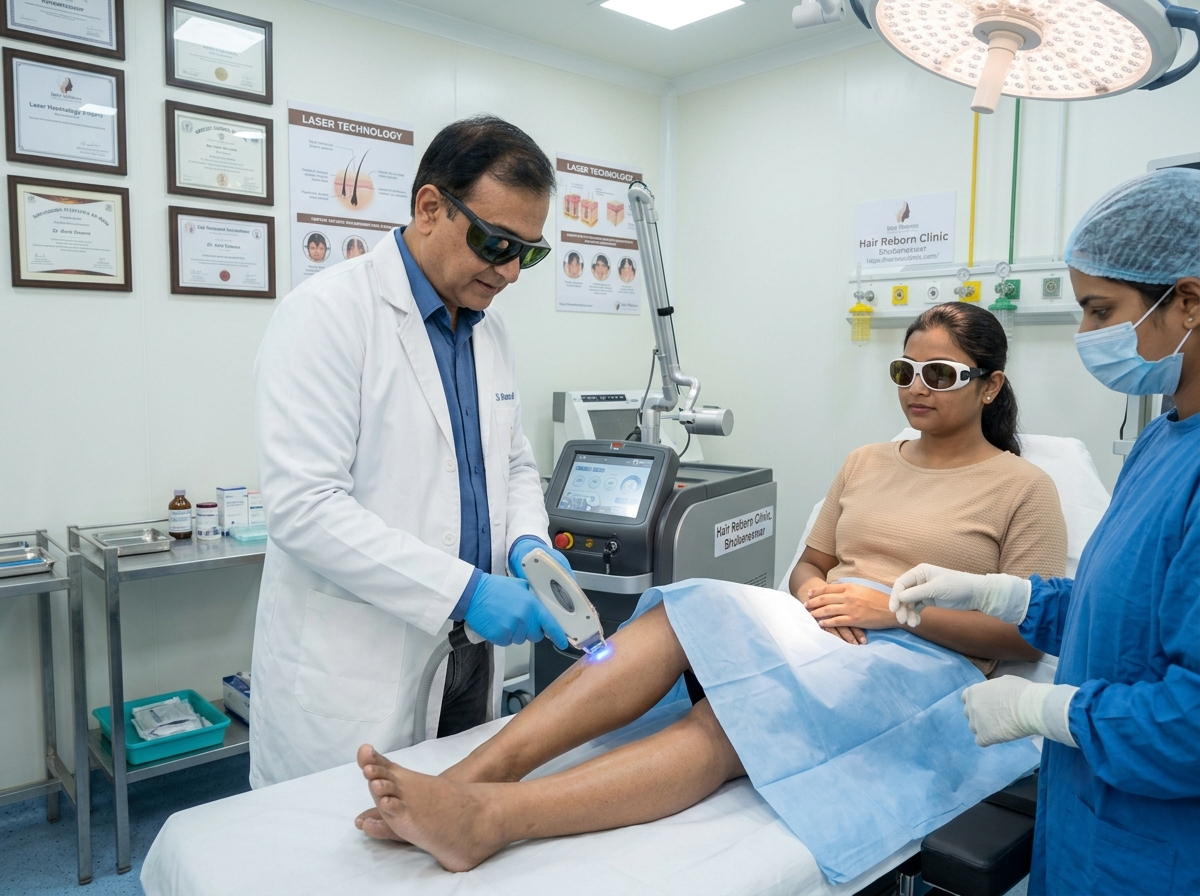
This guide compares laser hair removal, waxing, and shaving across every important dimension. By the end, you will have a practical understanding of which method fits your lifestyle and long-term goals.
How Each Method Works
Side-by-Side Comparison
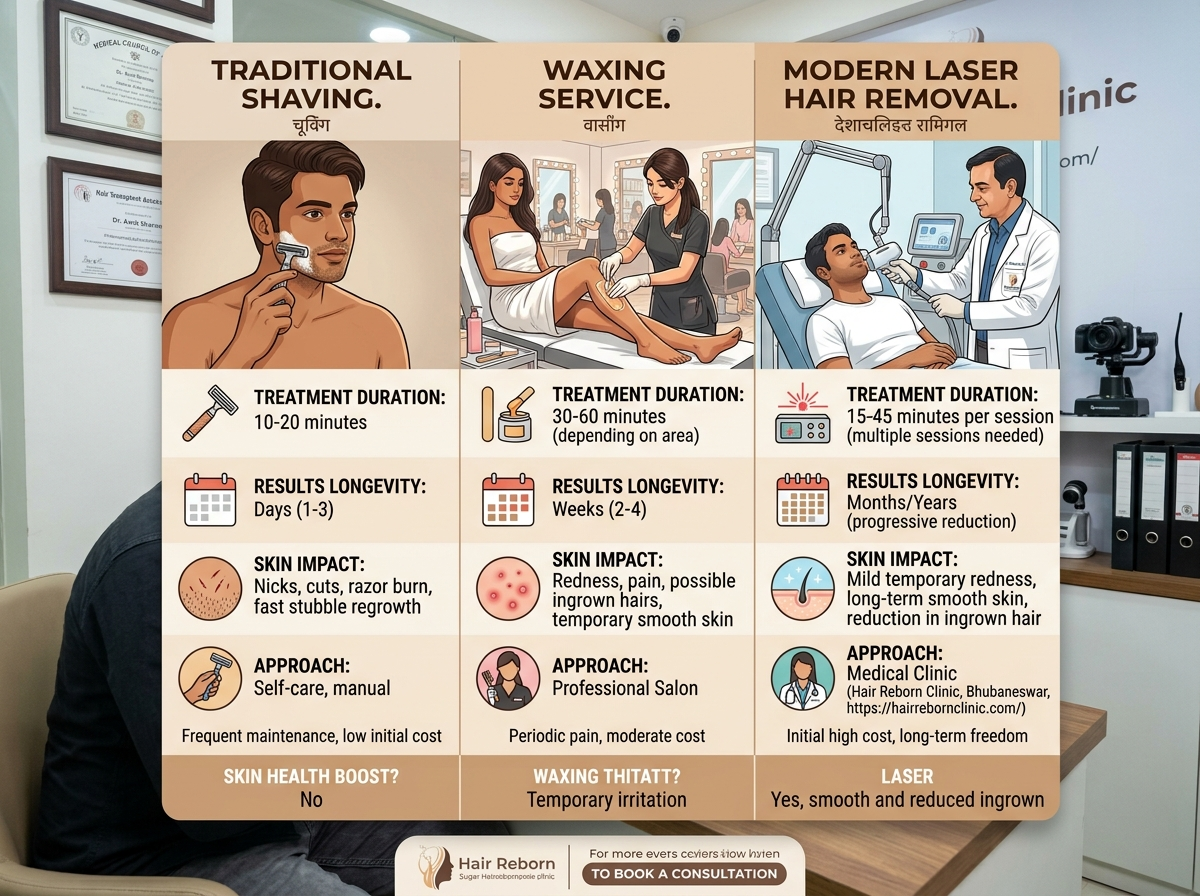
| Factor | Shaving | Waxing | Laser Hair Removal |
|---|---|---|---|
| How It Works | Cuts hair at skin surface | Pulls hair from root | Damages follicle with light energy |
| Duration of Results | 1 - 3 days | 2 - 4 weeks | Long-term to permanent reduction |
| Pain Level | None to minimal | Moderate to high | Mild to moderate (varies by area) |
| Cost Per Session | Rs 50 - 300 (razor) | Rs 200 - 2,000 | Rs 1,500 - 8,000 |
| Total Long-Term Cost | High (ongoing purchases) | High (repeated sessions) | Moderate (6-8 sessions, then done) |
| Risk of Ingrown Hair | High | Moderate | Low |
| Skin Irritation | Razor burn, cuts | Redness, minor bruising | Mild redness, rarely blistering |
Cost: Short-Term vs Long-Term
On the surface, shaving appears to be the cheapest option. A razor and shaving cream cost very little. But when you add up the cost of replacement blades, shaving products, and the time spent shaving every few days over years or decades, the total is significant. Some estimates put the lifetime cost of shaving at Rs 50,000 to Rs 1,00,000 or more.
Waxing is more expensive per session. A full body wax can cost Rs 1,500 to Rs 5,000 depending on the salon and the areas covered. If you wax every three to four weeks, the annual cost adds up quickly. Over five years, you might spend Rs 2,00,000 or more on regular waxing appointments.
Laser hair removal has a higher upfront cost but offers long-term savings. A full course of treatment for a specific area typically requires six to eight sessions, each costing Rs 1,500 to Rs 8,000 depending on the body area and the clinic. Once the course is complete, most patients need only occasional maintenance sessions, perhaps once or twice a year. The total investment is often lower than the cumulative cost of waxing over the same period.
Pain and Comfort
Shaving is virtually painless when done correctly. The main risks are nicks, cuts, and razor burn, which are uncomfortable but not truly painful. Using a sharp blade and proper shaving technique minimizes these issues.
Waxing is painful, and there is no way around it. The sensation of hot wax being pulled off the skin along with the hair is uncomfortable for most people, especially in sensitive areas like the underarms, bikini line, and face. Pain tolerance varies, but most people describe waxing as moderately to highly painful. The discomfort does decrease slightly with repeated sessions as the hair becomes finer.
Laser hair removal produces a sensation often described as a rubber band snapping against the skin. Modern laser machines with cooling systems have significantly reduced the discomfort. Most patients find it tolerable, and numbing creams can be applied before the session for those who are more sensitive. The pain is generally less than waxing but more than shaving.
Skin Impact and Side Effects
Shaving can cause razor burn, ingrown hairs, and small cuts. Over time, repeated shaving can also lead to skin darkening in certain areas, particularly the underarms and bikini area. Ingrown hairs are especially common in people with curly or coarse hair.
Waxing can cause redness, swelling, and occasionally bruising. There is also a risk of burns if the wax is too hot. Like shaving, waxing can cause ingrown hairs, though the risk is somewhat lower. People with sensitive skin may experience prolonged redness or allergic reactions to the wax formula.
Laser hair removal carries a risk of mild redness and swelling immediately after the session, which typically subsides within a few hours. In rare cases, there can be blistering, pigmentation changes, or scarring, usually when the procedure is performed on darker skin tones with an inappropriate laser type. Choosing a clinic with experience in treating your skin type is the best way to minimize these risks.
Ready for Smoother Skin?
Book a consultation to find out whether laser hair removal suits your skin and hair type, and how many sessions you are likely to need.
Schedule Your ConsultationReach us at +91 97771 75524
Who Should Choose Which Method?
Is Laser Hair Removal Permanent?
Laser hair removal is best described as permanent hair reduction rather than permanent hair removal. After a full course of treatment, most patients see a 70 to 90 percent reduction in hair growth. The remaining hairs are usually finer, lighter, and less noticeable.
Some hair may grow back over time due to hormonal changes, aging, or follicles that were dormant during the treatment period. This is why occasional maintenance sessions are recommended, typically once or twice a year, to keep the treated area smooth.
The results are significantly more lasting than waxing or shaving. Most patients consider the outcome close enough to permanent to be life-changing in terms of daily convenience.
Making the Right Choice for Your Skin Type
Your skin tone and hair color play an important role in determining which method will work best for you. Laser hair removal works most effectively on people with lighter skin and darker hair, because the contrast allows the laser to target the hair pigment without affecting the surrounding skin.
Advances in laser technology, particularly Nd:YAG lasers, have made the procedure safer and more effective for darker skin tones as well. However, it is critical to choose a clinic that uses the right laser type for your skin. Using the wrong laser on dark skin can cause hyperpigmentation or burns.
Shaving and waxing work on all skin types and hair colors. If you have very light, grey, or red hair, laser may not be effective for you, and waxing or shaving may remain your best options.
Frequently Asked Questions
Can I switch from waxing to laser hair removal?
Yes, but you should stop waxing at least four to six weeks before your first laser session. The laser needs the hair root in the follicle to be effective, and waxing removes it. Shaving is fine between sessions because it does not disturb the root.
Is laser hair removal safe during pregnancy?
Most dermatologists recommend postponing laser hair removal during pregnancy as a precaution, even though there is no direct evidence of harm. Hormonal changes during pregnancy can also affect hair growth patterns, making treatment results less predictable.
Does laser hair removal work on facial hair?
Yes. Laser hair removal is commonly used on the upper lip, chin, and jawline. It is especially helpful for women dealing with hormonal facial hair growth. Multiple sessions are needed for best results.
How soon after shaving can I get laser treatment?
You should shave the treatment area one to two days before your laser session. The hair should be trimmed just below the skin surface so the laser can target the follicle without burning surface hair.