
How to Choose the Best Hair Transplant Doctor in Bhubaneswar
Looking for the best hair transplant doctor in Bhubaneswar? Learn the key factors to evaluate before choosing a surgeon for your hair restoration procedure.
Choosing a hair transplant doctor is not the same as picking a general physician. This is a cosmetic procedure with results that will be visible for the rest of your life. A good result gives you natural-looking, permanent hair coverage. A poor one leaves you with unnatural hairlines, patchy growth, or visible scarring that can be difficult and expensive to correct.
Bhubaneswar has seen a sharp increase in the number of clinics offering hair transplant services. While this gives patients more options, it also makes the selection process harder. Not all clinics operate at the same standard, and flashy marketing does not always translate to clinical skill.
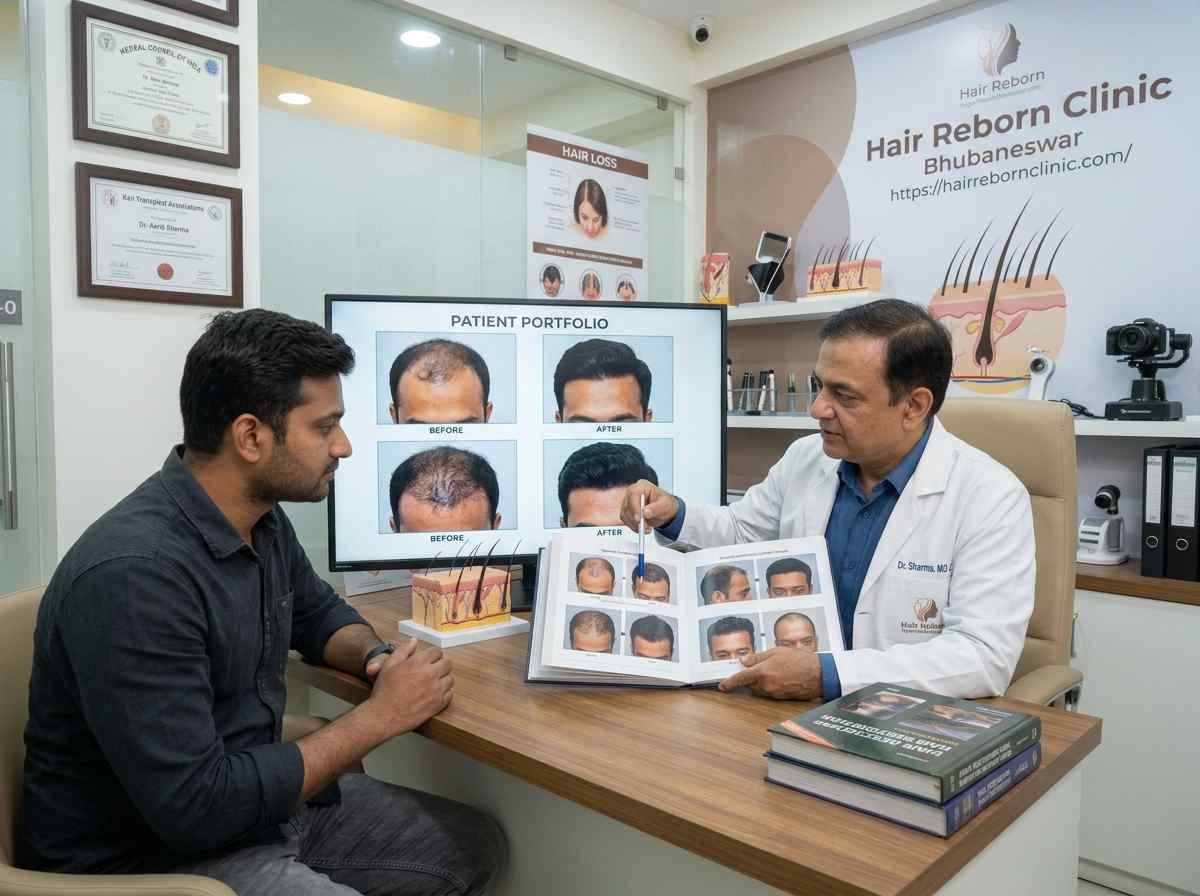
This guide walks you through the key factors you should evaluate before choosing a hair transplant surgeon in Bhubaneswar. It covers everything from credentials and experience to consultation quality and aftercare, so you can make an informed decision rather than a rushed one.
- Check the Surgeon's Qualifications and Credentials
- Evaluate Their Experience and Track Record
- What to Look for During the Consultation
- Key Questions to Ask Your Surgeon
- Assess the Clinic Infrastructure
- Read Patient Reviews and Testimonials
- Red Flags to Watch Out For
- Aftercare and Follow-Up Support
- Frequently Asked Questions
Check the Surgeon's Qualifications and Credentials
The first thing to verify is whether the doctor performing the procedure is a qualified dermatologist, plastic surgeon, or cosmetic surgeon. Hair transplant surgery is a medical procedure, and it should be performed by someone with formal training and registration with the appropriate medical council.
Look for qualifications such as MD in Dermatology, MS in Plastic Surgery, MCh, or equivalent postgraduate degrees. Membership in professional bodies like the Association of Hair Restoration Surgeons of India (AHRSI) or the International Society of Hair Restoration Surgery (ISHRS) is an additional indicator of specialization.
Be cautious of clinics where the lead surgeon is not a specialist. Some centers employ general physicians or dentists who have completed short certification courses in hair transplantation. While they may have technical training, the depth of understanding that comes with a dermatology or surgical background is hard to replicate in a weekend workshop.
Evaluate Their Experience and Track Record
Experience matters in hair transplant surgery. A surgeon who has performed hundreds or thousands of procedures will have a better understanding of graft handling, hairline design, implantation angles, and how to manage complications if they arise.
Ask the surgeon how many hair transplant procedures they have performed. Ask specifically about the technique you are considering, whether it is FUE or FUT. A doctor who is experienced in one method may not have the same proficiency in the other.
Request to see before-and-after photographs of previous patients. These images should show patients with similar hair loss patterns to yours and should include results at different stages, from immediately after the procedure to 12 months post-transplant. Be wary of clinics that only show ideal results or use stock images.
What to Look for During the Consultation
The consultation is your best opportunity to evaluate the surgeon and the clinic. A good consultation should feel thorough, honest, and unhurried. Here is what to expect and what to watch for.
The surgeon should examine your scalp carefully, assess the donor area density, and discuss your hair loss pattern. They should be willing to explain the grade of your hair loss, the estimated number of grafts needed, and the technique they recommend, along with the reasoning behind it.
A trustworthy surgeon will also set realistic expectations. If someone promises you a full head of thick hair from a limited donor area, that is a red flag. Honest surgeons acknowledge limitations and discuss what is achievable rather than what sounds appealing.
Pay attention to whether the surgeon is doing the consultation personally or delegating it entirely to a coordinator or sales executive. While support staff can handle logistics, the medical evaluation and treatment plan should come from the surgeon directly.
Key Questions to Ask Your Surgeon
| Question | Why It Matters |
|---|---|
| How many hair transplant procedures have you performed? | Gauges hands-on experience with the technique |
| Will you personally perform the procedure? | Ensures the lead surgeon is involved, not just supervising |
| What technique do you recommend for my case and why? | Shows clinical reasoning and honesty about limitations |
| Can I see before-and-after photos of similar cases? | Provides evidence of consistent results |
| What does the total cost include? | Reveals whether the quote is all-inclusive or has hidden charges |
| What aftercare and follow-up support do you provide? | Indicates commitment to long-term patient outcomes |
Assess the Clinic Infrastructure
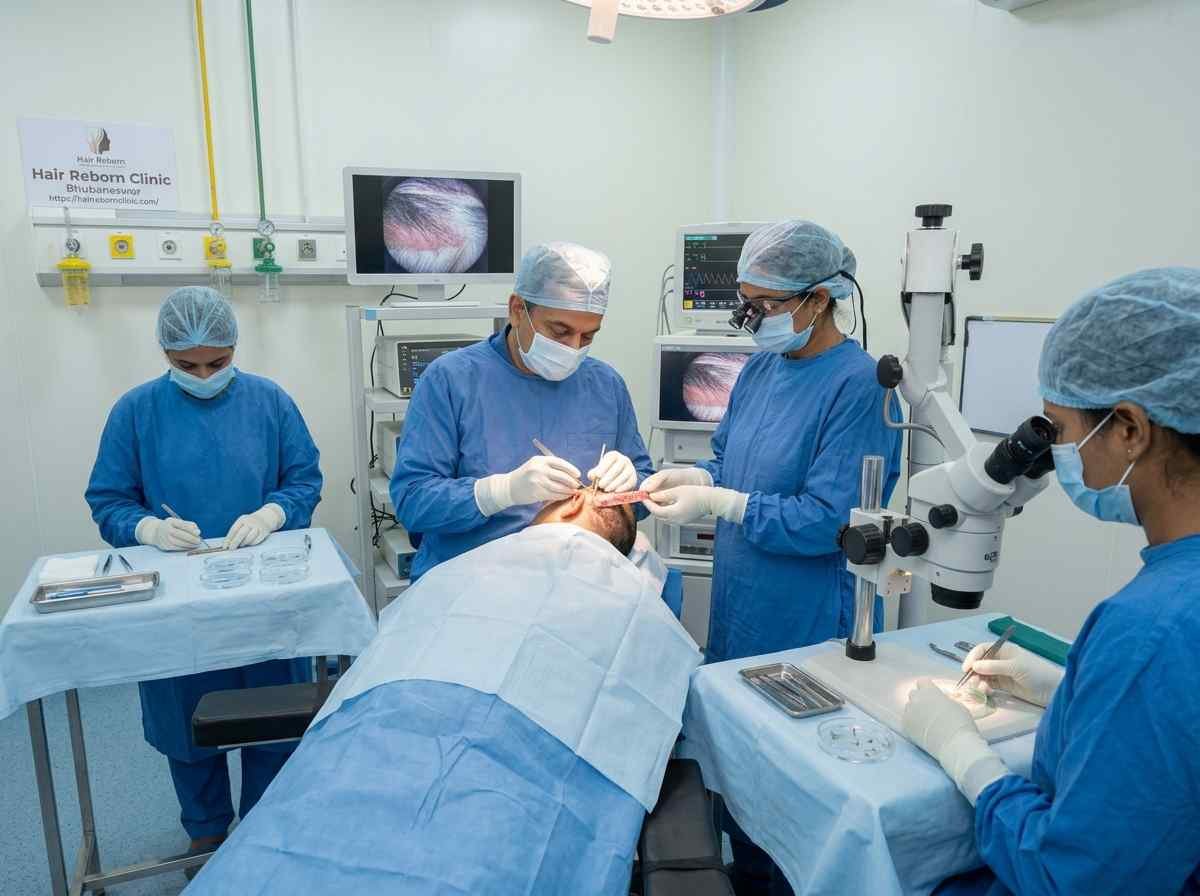
The quality of the clinic itself is almost as important as the surgeon. A hair transplant procedure can take 4 to 8 hours, and the conditions under which it is performed affect both the experience and the outcome.
The clinic should have a properly equipped operation theater with adequate lighting, sterile instruments, and temperature control. The extraction and implantation tools should be of professional grade, not improvised substitutes. Proper sterilization protocols should be visible, not just claimed.
If possible, visit the clinic before booking. Walk through the facility, observe the cleanliness, check whether the staff follows basic hygiene practices, and assess the overall environment. A clean, organized, and professional-looking clinic is more likely to deliver a safe and comfortable experience.
Read Patient Reviews and Testimonials
Online reviews are a useful source of unfiltered feedback. Check Google Reviews, Practo, and social media pages for patient experiences. Look for patterns rather than individual comments. If multiple patients mention long wait times, poor communication, or underwhelming results, those are red flags worth noting.
Keep in mind that very few patients leave reviews voluntarily. If a clinic has dozens of detailed, positive reviews with photographs, that is a strong signal. Conversely, a clinic with no reviews or only generic five-star ratings without detail should be approached with caution.
Video testimonials from real patients are another good indicator. While they can be curated, they still offer a more personal and verifiable account of the patient experience.
Ready to Take the Next Step?
Book a consultation with our hair restoration specialists. Bring your questions, and we will walk you through the options that suit your hair loss.
Schedule Your ConsultationReach us at +91 97771 75524
Red Flags to Watch Out For
Aftercare and Follow-Up Support
The relationship with your surgeon should not end the day the procedure is done. Aftercare is a crucial part of the transplant process. The first few weeks after surgery require careful handling of the transplanted area, proper medication, and monitoring for any signs of infection or poor graft survival.
Ask the clinic about their follow-up schedule. A good clinic will schedule check-ins at regular intervals, typically at one week, one month, three months, six months, and one year post-procedure. They should also be available for unscheduled queries if you notice anything unusual during recovery.
Clinics that offer post-transplant PRP therapy or growth factor treatments as part of their package often demonstrate a stronger commitment to long-term results.
Frequently Asked Questions
Should I choose a dermatologist or a plastic surgeon for my hair transplant?
Both can be qualified to perform hair transplants. Dermatologists with specialization in hair restoration and plastic surgeons trained in follicular unit procedures are both suitable. What matters most is their specific experience and track record in hair transplant surgery.
Is it worth traveling to another city for a better surgeon?
If there is a surgeon in another city with significantly more experience or better results for your specific case, traveling may be worth it. However, Bhubaneswar now has several skilled hair transplant surgeons, so you are likely to find a qualified option locally.
How many consultations should I attend before deciding?
Consulting with two or three surgeons is a reasonable approach. It gives you a basis for comparison in terms of recommendations, pricing, and how comfortable you feel with each surgeon.
What if my results are not satisfactory after the transplant?
If the results are not as expected, discuss your concerns with the surgeon first. In some cases, a touch-up session or additional grafts can improve the outcome. Choosing a reputable surgeon from the start significantly reduces the risk of dissatisfaction.