
Hair Transplant Side Effects: What Is Normal and How to Lower the Risks
A hair transplant is a minor surgical procedure, and like any procedure it comes with some side effects. Most are mild, short-lived and part of normal healing. A few are less common and worth knowing about before you book.
Book Free Consultation
The aim of this guide is not to worry you. It is to help you tell the difference between what is expected and what needs a call to your clinic, and to show you how much of the risk sits in your hands and your surgeon's. To understand the procedure these side effects follow, see our FUE hair transplant in Bhubaneswar page.
Common Side Effects in the First Two Weeks
Nearly every patient experiences some of the following in the days after surgery. They are signs that the scalp is healing, not signs that something has gone wrong.
Swelling
Swelling usually appears on the forehead and around the eyes on day 2 or 3, then fades by day 5 to 7. It happens because the fluid used during the procedure slowly moves downward with gravity. Sleeping with your head raised on two pillows and using a cold compress on the forehead, never on the grafts, helps it settle faster.
Redness and Scabbing
Tiny scabs form around each graft within the first day. The scalp may look pink or red, especially if you have fair skin. With gentle washing as instructed, most scabs fall off within 7 to 10 days. Redness can take a few weeks longer to fade completely.
Itching
Itching is common as the skin heals, usually starting around day 4 or 5. Scratching can dislodge grafts in the first week, so avoid it. A prescribed lotion and regular gentle washing usually keep it under control.
Mild Pain and Tightness
Most people describe the discomfort as a dull ache rather than sharp pain, and it generally eases within two or three days. If you would like to know more about what you feel on the day itself, read our guide on whether a hair transplant is painful.
Side Effects That Can Last Longer
Some side effects take weeks or months to resolve. They are still usually temporary, but it helps to expect them.
Shock Loss
Between weeks 2 and 6, most of the transplanted hairs fall out. Some of your existing hair around the grafts may also thin for a while. This is called shock loss. The follicles stay alive under the skin and usually begin to regrow from month 3 or 4. You can follow the full sequence in our hair transplant recovery timeline.
Numbness
Small nerves in the scalp are affected during the procedure, so a patch of numbness in the donor or recipient area is common. Feeling usually returns gradually over a few weeks to a few months.
Folliculitis and Ingrown Hairs
As new hairs push through the skin around month 2 to 4, some patients get small red bumps or pimples. Most clear on their own. If they become painful, warm or spread, your clinic can treat them with a short course of medication.
Hair Transplant Scars: What to Expect
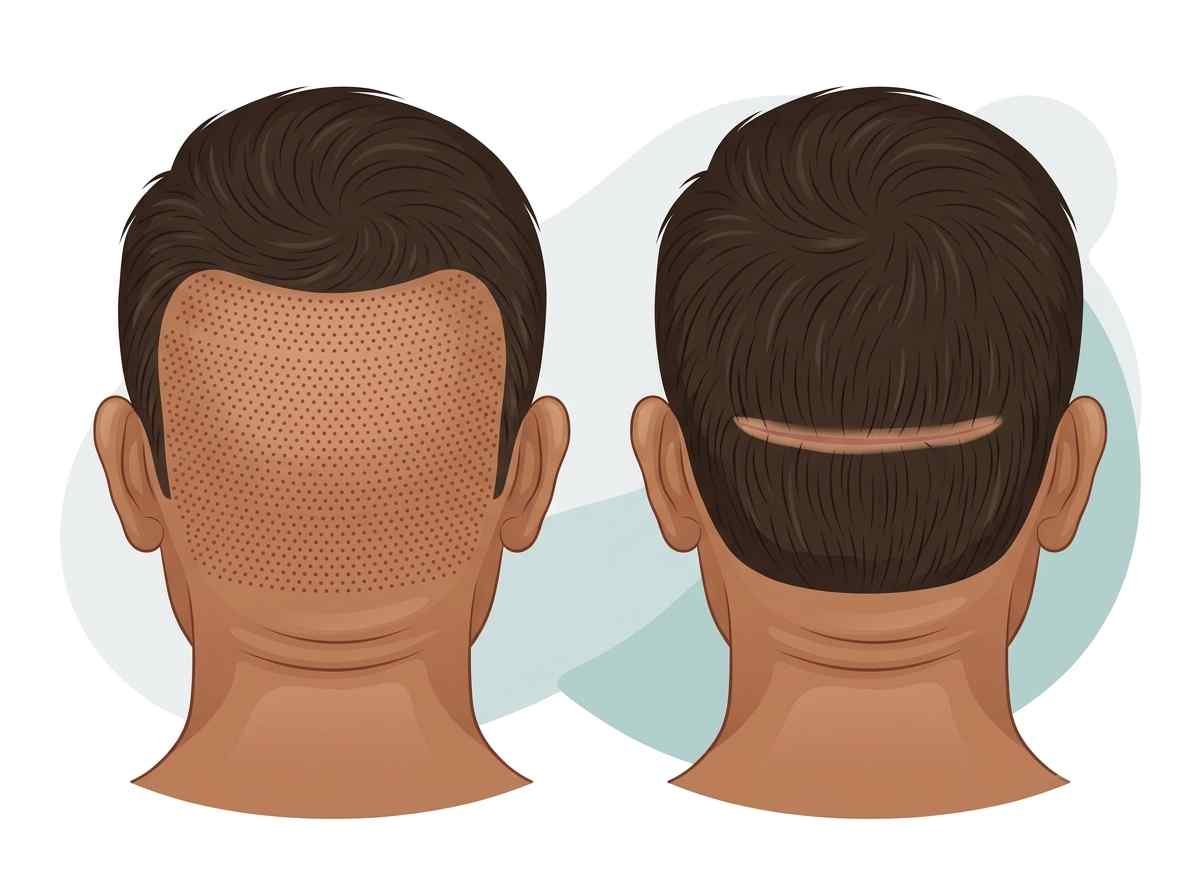
Every hair transplant leaves some form of scar, because skin is being opened to remove follicles. The type of scar depends on the technique.
With FUE, follicles are removed one by one with a tiny punch, leaving small dot scars spread across the donor area. These are very hard to see once the hair grows back, even with a fairly short haircut. With FUT, a thin strip of skin is removed and stitched, leaving a single linear scar at the back of the head. It is usually hidden by hair of normal length, but it can show with a very close crop.
If you prefer short hairstyles, discuss this openly with your doctor. Our guide on FUE vs FUT explains how scarring differs between the two.
Rare Complications
Serious problems after a hair transplant are uncommon when the procedure is done by a trained team in a clean setting. Still, you should know what they look like.
Infection is rare, but signs include increasing pain after day 3, yellow discharge, spreading redness or fever. Excess bleeding can occur in people on blood thinners, which is why your full medical history matters. Small cysts can form where grafts sit too deep. Poor growth can happen if grafts are handled roughly or kept outside the body for too long. Over-harvesting, when too many follicles are taken from the donor area, can leave the back of the head looking thin.
An unnatural hairline, one that is too low, too straight or too dense at the edge, is not a medical complication but it is one of the most common regrets. It is avoided through careful planning, not luck.
Normal or Needs Attention: A Quick Guide
Use this table as a simple reference during your recovery. When in doubt, call your clinic. A quick check is always better than waiting.
| Symptom | Usually Normal If | Call Your Clinic If |
|---|---|---|
| Swelling | It peaks by day 3 and fades by day 7 | It reaches the eyes after day 5 or keeps getting worse |
| Redness | It fades steadily over 2 to 4 weeks | It spreads, feels hot or comes with discharge |
| Pain | It is mild and eases within 3 days | It increases after day 3 or needs more than basic painkillers |
| Itching | It is manageable with lotion and washing | It comes with a rash or widespread bumps |
| Shedding | It happens between weeks 2 and 6 | Hair has not started regrowing by month 6 |
| Numbness | It slowly reduces over weeks or months | It is still unchanged after 6 months |
| Bumps | A few small pimples appear around months 2 to 4 | They are painful, large or keep coming back |
How to Lower the Risks

Much of what decides your result happens before the first graft is placed. A few steps make a real difference.
At Hair Reborn, every hair transplant begins with a scalp assessment and a review of your health history, so risks are discussed before any date is fixed.
Inquire About This Service
Ready to Take the Next Step?
Book a consultation with our hair restoration specialists. Bring your questions about side effects and recovery, and we will explain exactly what to expect in your case. Reach us at +91 97772 14816.
Book Free ConsultationFrequently Asked Questions
What are the most common side effects of hair transplant surgery?
The most common side effects are swelling, redness, scabbing, itching and mild discomfort in the first one to two weeks. Temporary shedding of the transplanted hair between weeks 2 and 6 is also expected. Most patients find these manageable with basic aftercare.
Are hair transplant side effects permanent?
Most are temporary. Swelling, redness and itching settle within weeks, and numbness usually fades within a few months. The one lasting change is a scar in the donor area, which is generally well hidden when the hair grows back.
Does a hair transplant leave a visible scar?
FUE leaves tiny dot scars that are rarely visible once hair regrows. FUT leaves a thin line at the back of the head that is hidden by normal-length hair. Very short or shaved styles may show either type, so discuss your preferred haircut before surgery.
How common is infection after a hair transplant?
Infection is uncommon when the procedure is done in a sterile setting and aftercare is followed. Watch for pain that increases after day 3, discharge, spreading redness or fever, and contact your clinic straight away if you notice any of these.
Can I reduce swelling after a hair transplant?
Yes. Sleep with your head raised for the first few nights, use a cold compress on the forehead, not on the grafts, avoid bending forward and drink plenty of water. Taking medicines exactly as prescribed also helps.