
How Many Laser Hair Removal Sessions Do You Need for Lasting Results?
How many laser hair removal sessions are needed for permanent results? Learn the session count by body area, skin type, and what affects the total number.
One of the most common questions people ask before starting laser hair removal is: how many sessions will it take? The answer matters because it directly affects the total cost, the time commitment, and the expectations you carry into the process.
The short answer is that most people need six to eight sessions for significant, lasting hair reduction. But the actual number varies based on the body area being treated, your hair type, your skin tone, hormonal factors, and the type of laser used. Understanding why multiple sessions are needed and what influences the count helps you plan better and avoid disappointment.

This guide covers everything you need to know about session counts for laser hair removal, including how the hair growth cycle works, how many sessions each body area typically requires, and what you can do to get the best possible results from your treatment.
Why Multiple Sessions Are Necessary
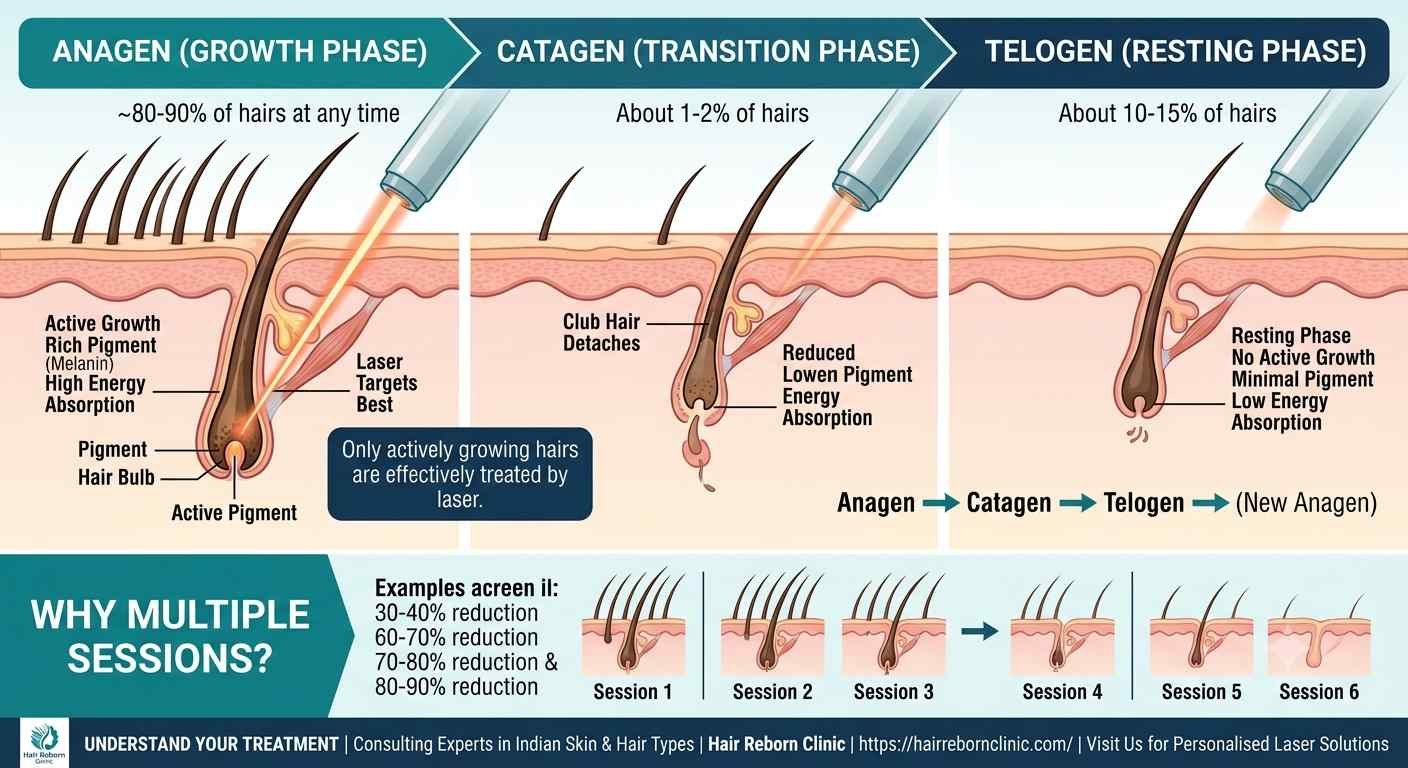
Laser hair removal does not work on all hairs at once. The reason is the hair growth cycle. At any given time, only a portion of your hair follicles are in the active growth phase, known as anagen. This is the only phase during which the laser can effectively target and damage the follicle.
The remaining follicles are either in the catagen (transitional) or telogen (resting) phase. During these phases, the hair is either detaching from the follicle or lying dormant beneath the skin. The laser cannot effectively treat these hairs because the connection between the hair shaft and the follicle is weak or absent.
Because only 20 to 30 percent of your hair follicles are in the anagen phase at any one time, multiple sessions are needed to catch each follicle during its active growth window. Sessions are typically spaced four to eight weeks apart, depending on the body area and its hair growth cycle.
Average Session Count by Body Area
| Body Area | Average Sessions Needed | Typical Interval Between Sessions |
|---|---|---|
| Upper Lip | 6 - 8 | 4 weeks |
| Chin and Jawline | 6 - 10 | 4 - 6 weeks |
| Underarms | 6 - 8 | 4 - 6 weeks |
| Bikini Area | 6 - 8 | 4 - 6 weeks |
| Full Legs | 6 - 10 | 6 - 8 weeks |
| Arms | 6 - 8 | 6 - 8 weeks |
| Back and Chest (Men) | 8 - 10 | 6 - 8 weeks |
| Full Face | 6 - 10 | 4 - 6 weeks |
Note: These figures are averages. Individual results may vary based on hormonal factors, hair density, and adherence to the treatment schedule.
Factors That Affect the Number of Sessions
What Happens During Each Session
Each laser hair removal session follows a similar routine. The treatment area is cleaned, and a cooling gel or numbing cream may be applied. The laser technician or dermatologist adjusts the laser settings based on your skin type, hair color, and the area being treated.
The laser is then applied to the skin in quick pulses. Each pulse treats a small area, and the sensation is often compared to a mild snapping feeling. Modern lasers with built-in cooling systems make the experience significantly more comfortable than older machines.
A session can take anywhere from 10 minutes for a small area like the upper lip to 60 minutes or more for larger areas like the back or full legs. After the session, the treated area may appear slightly red and feel warm, similar to a mild sunburn. This typically resolves within a few hours.
What to Expect Between Sessions
In the days following a session, treated hairs will begin to shed. This is sometimes called "falling out," but what is actually happening is that the damaged hairs are being pushed out of the follicle. You may notice what looks like stubble during this process, but it is dead hair working its way to the surface.
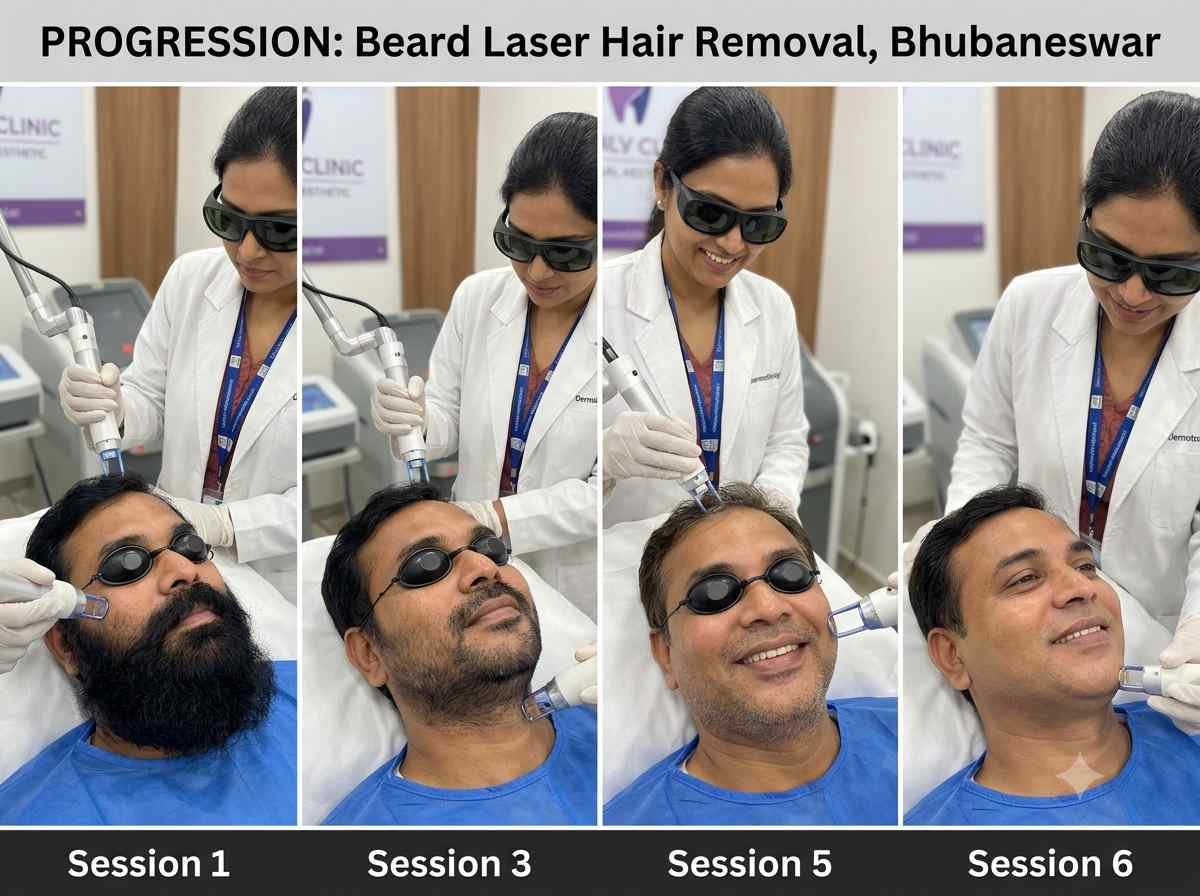
Between sessions, new hair will begin to grow from follicles that were in the resting phase during the previous treatment. This new growth is what the next session will target. Over time, you will notice that the regrowth becomes finer, sparser, and lighter. By the fourth or fifth session, many patients see a dramatic reduction in hair density.
During the treatment course, avoid waxing, plucking, or threading the treated area. These methods remove the hair root, which the laser needs in order to work. Shaving is fine because it only cuts the hair at the surface and leaves the root intact.
Ready for Smoother Skin?
Book a consultation to find out whether laser hair removal suits your skin and hair type, and how many sessions you are likely to need.
Schedule Your ConsultationReach us at +91 97771 75524
Maintenance Sessions After the Initial Course
Even after completing six to eight sessions, some hair may regrow over time. This is particularly true for hormonally driven hair growth areas like the face and bikini line. Maintenance sessions, typically once or twice a year, help keep the treated area smooth and prevent significant regrowth.
Most patients find that maintenance sessions are quick, inexpensive, and easy to fit into their routine. The amount of regrowth between maintenance sessions is usually minimal, and each touch-up session reinforces the results of the initial treatment.
Tips to Maximize Your Results
Frequently Asked Questions
Can I get laser hair removal done in fewer sessions if I choose a more powerful laser?
A more advanced laser may be more efficient per session, but the total number of sessions depends on the hair growth cycle, not just the laser intensity. You still need multiple sessions to catch each follicle during its active phase. Overly aggressive settings can increase the risk of side effects without reducing the session count.
Will hair grow back thicker after laser treatment?
No. Laser hair removal does not cause hair to grow back thicker. Any regrowth after treatment is typically finer, lighter, and less noticeable than the original hair.
Is there a gap limit between sessions? What if I miss one?
Missing one session does not undo previous progress, but it may extend the total treatment timeline. Try to stay as close to the recommended schedule as possible for the best results. If you miss a session, reschedule it as soon as you can.
Can men get laser hair removal? How many sessions do they need?
Yes, laser hair removal is popular among men for areas like the back, chest, shoulders, and neck. Men typically need 8 to 10 sessions for these areas because male body hair is often denser and coarser, and testosterone can promote faster regrowth.